
The Southall Journal
Mouse Droppings in a Southall Kitchen: What to Check Before You Call
Found small dark marks beside a kitchen unit? Learn what to record, how to protect food and what an inspection can establish before choosing a treatment.
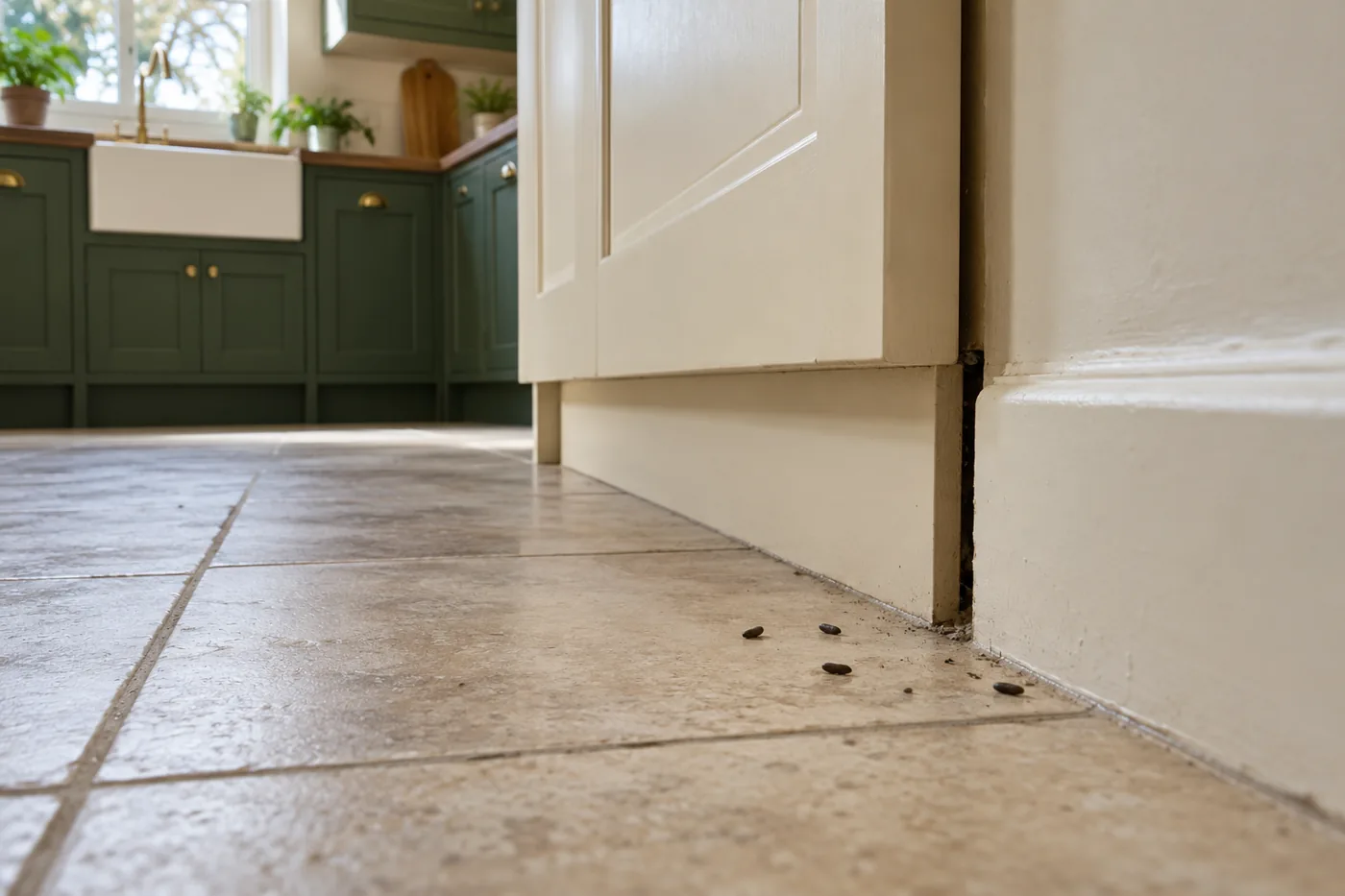
Finding a few dark pellets near a kitchen unit is unsettling, especially when you use the room every day. It is tempting to decide immediately that you have mice, clean everything and fill the first gap you can see. A better first step is to record what you found, protect food and let the pattern of evidence guide the next decision. Droppings can point towards rodent activity, but their appearance alone does not establish the species, the number of animals or the route they used.
Start with the exact location
Note where the marks sit. Are they beneath the sink, behind a freestanding appliance, inside a cupboard, or beside a skirting board? A photograph showing the wider area is often more useful than a close-up with no context. Record the date and whether the marks are new to you. If you can do so without moving heavy equipment, check nearby surfaces for damaged packaging, disturbed crumbs or marks around an opening.
These details help an inspector decide where to look first. They also stop an ordinary stain or debris from becoming an assumed diagnosis. You do not need to identify the pest before making an enquiry. The point is to describe what you have actually seen.
Keep food and food-contact areas in mind
Set aside food with damaged packaging or signs of contamination. Do not use it simply because the contents look intact. Move unaffected food into containers with well-fitting lids and clear away accessible crumbs and spills. Before preparing a meal, clean the work surface according to the product instructions you normally use for that surface.
Avoid sweeping or vacuuming suspected rodent droppings. UK Health Security Agency advice on rodent waste warns that dry cleaning can send material into the air. If the area must be cleaned before a visit, wear suitable household gloves, use a damp method and dispose of the used material carefully. Wash your hands afterwards. If the marks are extensive or you are unsure how to handle them, ask for specific advice before disturbing the area.
The Food Standards Agency lists droppings, gnawed packaging, footprints and smears among possible rodent signs in food premises. A household kitchen is different from a commercial kitchen, but the basic reason for taking food protection seriously is the same: possible contamination needs attention.
Look for a pattern rather than a single clue
Mice can move through concealed edges of a kitchen, so evidence may appear in more than one place. A handful of marks under a sink and damage inside a food cupboard is more informative than either observation alone. Listen for activity when the room is quiet, but remember that a noise behind a wall may have another cause. Avoid pulling out fixed cabinets or touching cables to investigate.
Check accessible areas in good light. You might note:
- The position and approximate amount of suspected droppings.
- Food packets with fresh-looking nibbles or small tears.
- Marks near pipe openings, floor edges or cabinet backs.
- The rooms in which you have noticed sounds or sightings.
- Whether the same signs appear again after safe cleaning.
This is a record for an inspection, not a checklist that confirms a mouse infestation. If the signs look larger than expected or you see activity outside near bins or drains, describe that too. The distinction between a mouse and a rat can affect the inspection route. The site’s mice control service explains the indoor evidence it considers, while rat control also looks at outdoor runs, burrows and drainage concerns.
What a gap does and does not tell you
A hole around a pipe is worth photographing, particularly if it connects a cupboard to a wall void. It is not proof that this is the active entry point. An opening may be old, may lead only within the property, or may be one of several routes. A professional inspection follows the available evidence from signs to possible access, rather than assuming the most visible gap explains the whole problem.
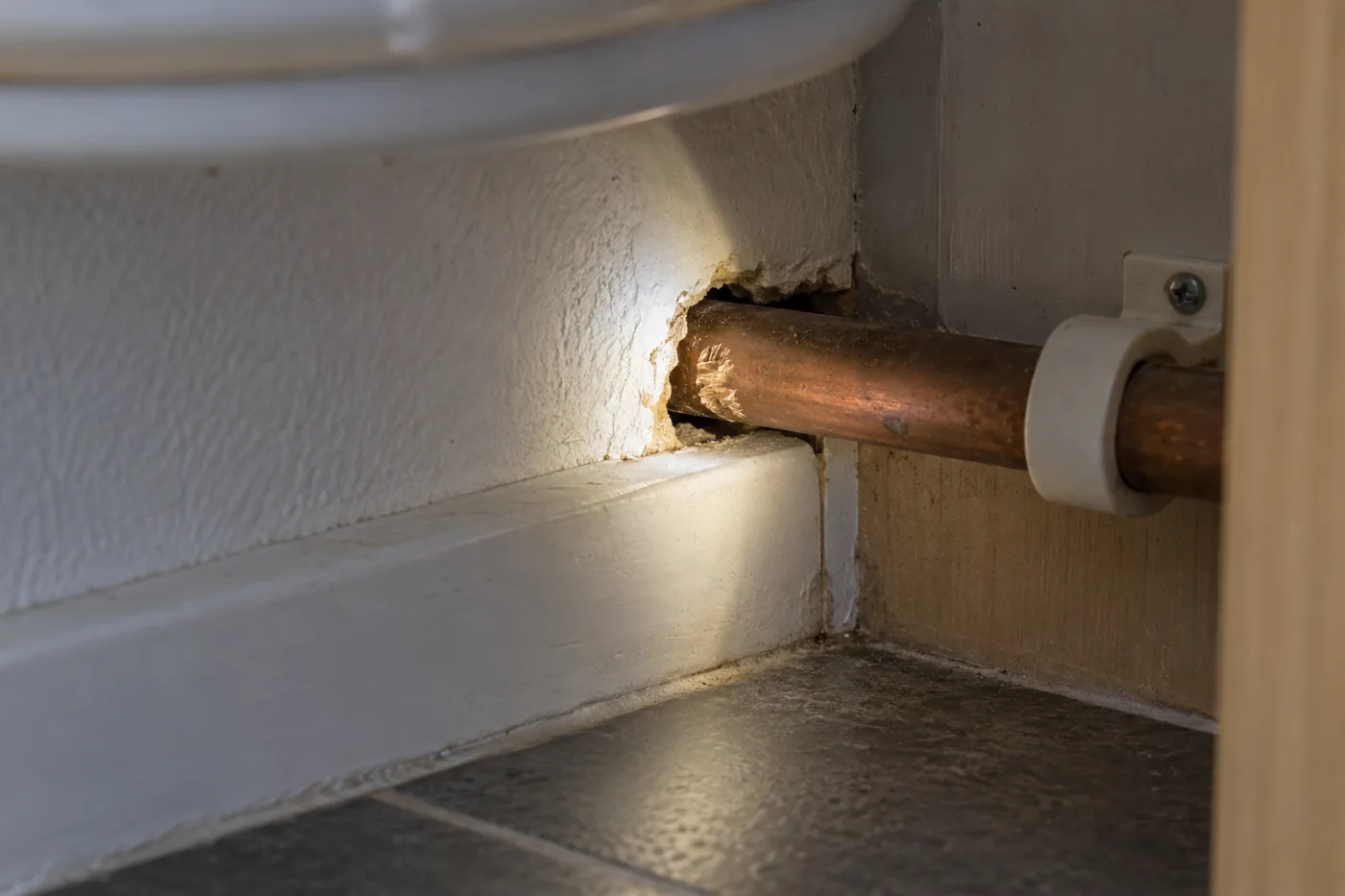
Tell the specialist about accessible service voids, a loose kickboard or a door that does not close properly. Mention any recent building work. If you rent, tell the landlord or managing agent about structural defects while arranging the pest enquiry. The right time and method for closing a gap depend on what is found and whether animals may already be inside. Sealing the obvious opening without checking the wider route can leave the underlying issue unresolved.
Prepare for a useful visit
Keep your notes and photographs together. Explain when you first noticed signs and whether another room, flat or shared area may be involved. If you have children, pets, an aquarium or a household member with particular needs, raise this before any treatment is agreed. Access restrictions also matter: a locked meter cupboard or a heavy appliance may limit what can be checked on the first visit.
You usually do not need to empty every cupboard before an inspection. Ask what should be moved for your appointment. Keep the areas you can safely reach reasonably clear, but do not dismantle fixtures or disturb possible evidence solely to make the room look tidy. If you have already used a shop-bought product, tell the specialist what it was and where it was placed. Do not combine treatments while waiting for advice.
An inspection should establish what can be identified, where activity is evident and what remains uncertain. It may lead to recommendations about food storage, cleaning, proofing or suitable control. The method and follow-up should reflect the actual findings, not a fixed promise based on one photograph.
Before the visit, think about how the kitchen is used at different times. Food left out overnight, a pet feeding area and an overflowing waste bin may change where an inspector looks. Mention any recurring leak beneath the sink, even if it seems unrelated. In a shared building, activity reported by a neighbour may be relevant, but avoid assuming that their problem has the same source as yours. Observations help keep the conversation practical and allow the specialist to explain which details matter to the plan.
After the immediate worry
Keep a short dated record of new signs in each room. This makes it easier to judge whether activity is changing and gives a useful basis for any review. Follow the instructions for the method actually used; cleaning or moving equipment too soon may interfere with monitoring. If you notice a different kind of sign later, report it instead of treating every new mark as confirmation of the original suspicion.
For a Southall home or workplace, the most useful enquiry starts with the full postcode, the affected room and a clear description of what you have seen. The team can then discuss whether an inspection is appropriate and what access may be needed. You can contact the Southall team with the evidence you have, even if you cannot yet name the pest.