
Pest control services · Southall
Moth Control Southall
Moth control in a home needs more than counting the adults in flight. The useful inspection follows vulnerable materials, larval evidence and the places that have remained undisturbed. Describe damaged garments, carpet edges or storage areas so the likely source and appropriate treatment scope can be assessed.
- Vulnerable wool and other animal-fibre items examined.
- Larval feeding damage distinguished from adult sightings.
- Wardrobe bases and concealed textile edges considered.
- Handling and cleaning advice matched to material care.
- Monitoring interpreted alongside fresh damage and source checks.
Distinguish a flying moth from a textile-pest source
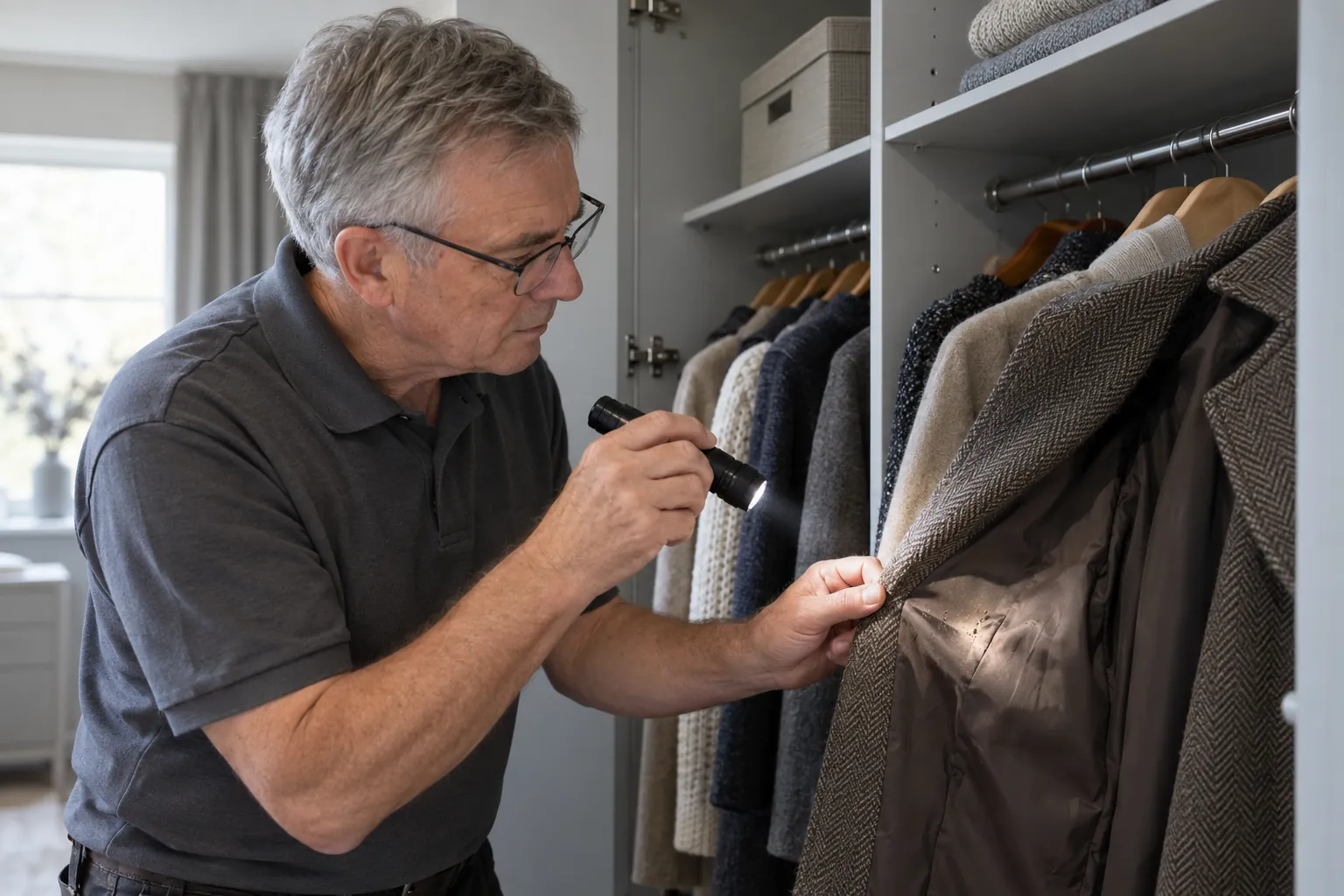
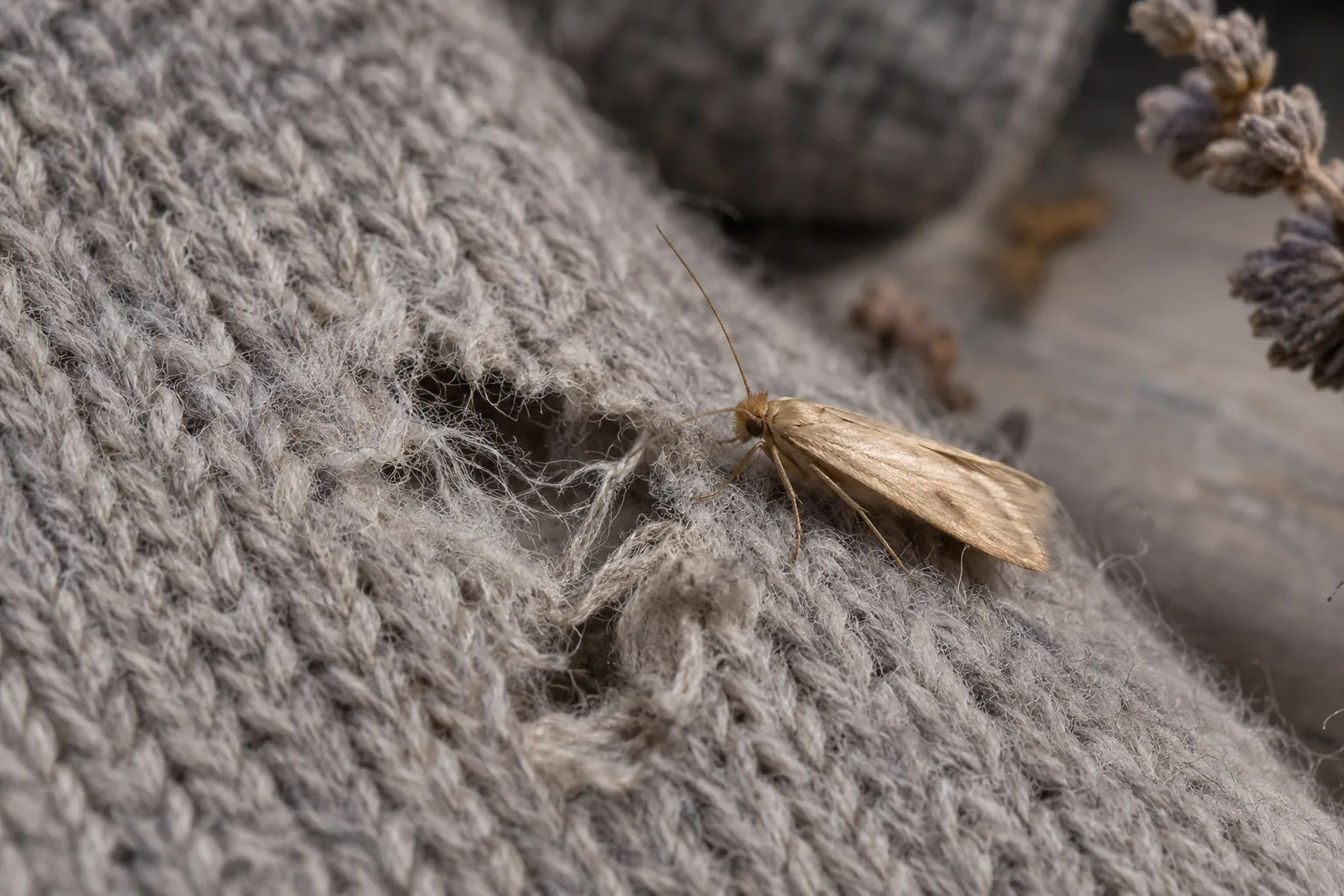
Tell the specialist where adults have been seen and whether any clothing, carpet or stored item shows damage. A moth flying near a window does not establish the source of textile damage elsewhere in the room. Different moths have different associations, so identification should guide the inspection rather than assuming every adult is a clothes moth. Photographs of insects and the affected material can help focus the enquiry.
Keep the locations of damaged items distinct. A coat in a wardrobe, wool carpet under furniture and a stored blanket may need different access and handling. Other fabric pests can produce damage that is easily confused with moth activity; carpet beetle treatment concerns a different larval source. The point of identification is to select a useful investigation, not to add an unrelated treatment simply because a natural fibre is affected.
Trace the affected stock of textiles
Describe how items have been stored and moved. A damaged blanket transferred from one cupboard to another may change the areas that need assessment. In a business or shared property, the person responsible for stored furnishings may hold information that the person booking the visit does not have. Bring that history into the enquiry before the inspection scope is fixed.
The specialist should separate confirmed affected materials from items that are being checked because they were stored nearby. This makes preparation more proportionate and avoids unnecessary disposal. Some objects may require a cleaner, conservator or other material specialist rather than ordinary household handling. If an item cannot be moved, opened or cleaned as proposed, explain that early so the recommendation can reflect the actual constraints instead of an assumed empty wardrobe.
Inspect the material and the sheltered edges around it
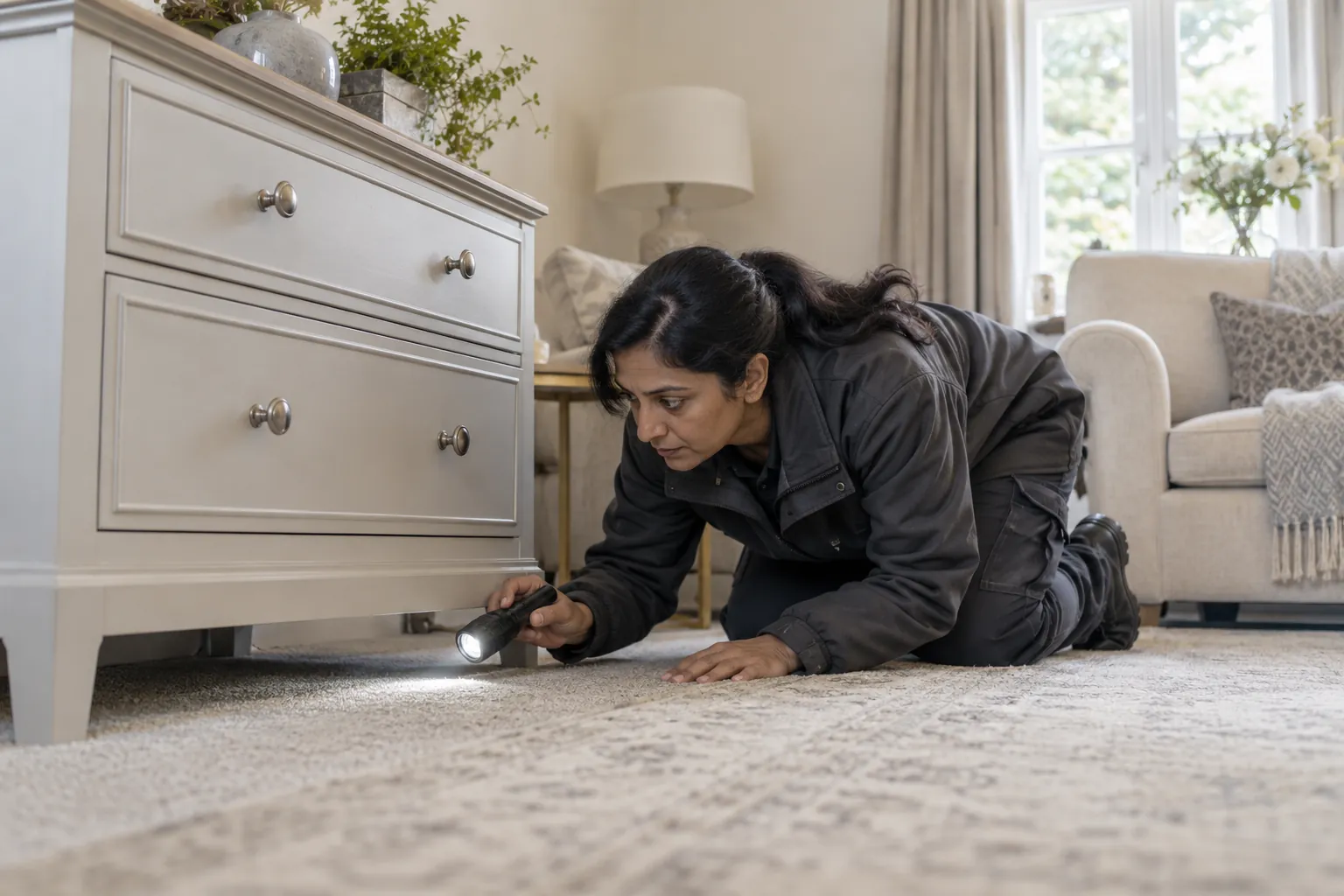
The inspection may involve garment folds, linings, seams, the base of a wardrobe and accessible carpet edges beneath furniture. A torch or close inspection can help locate larvae, webbing, cases or other evidence in relation to the damage. Explain which heavy items cannot be moved safely and whether fitted storage prevents the back or base from being reached.
Textiles that have not been disturbed for some time can require particular attention, but the inspection should record what was actually examined. A quick look at the visible face of a carpet does not establish the condition beneath every fitted unit. Ask which materials show evidence, which adjacent items need checking and which areas are inaccessible. That record helps keep the proposed work directed at a plausible source rather than a general room-wide application without a defined purpose.
| Evidence | Where the inspection looks | What it helps decide |
|---|---|---|
| Damage in garment folds | Seams, linings and original storage | Which items require material-specific handling |
| Activity near a carpet edge | Accessible underside edges and concealed debris | Whether a sheltered textile source is present |
| Adult moths without damaged fabric | Identification and location history | Whether the enquiry concerns a textile pest |
Separate suspect textiles without redistributing them
Ask which items should be contained and which can remain in place for inspection. Use the handling arrangement advised rather than carrying loose affected clothing through other rooms. Keep photographs of damage and the original storage locations before items are cleaned. This preserves useful context while allowing the specialist to compare the evidence with the cupboard, carpet edge or furniture where the material had been kept.
Clear safe access to agreed wardrobe bases and carpet edges, but do not move heavy furniture alone. Discuss any proposed vacuuming or cleaning before starting; it needs to fit the inspection and treatment plan. Raise material-care questions if instructions are unsuitable for a delicate item or a fitted storage area cannot be opened. Preparation should be practical for the property, not a generic instruction to empty everything regardless of what is affected.
Combine source management with suitable control options
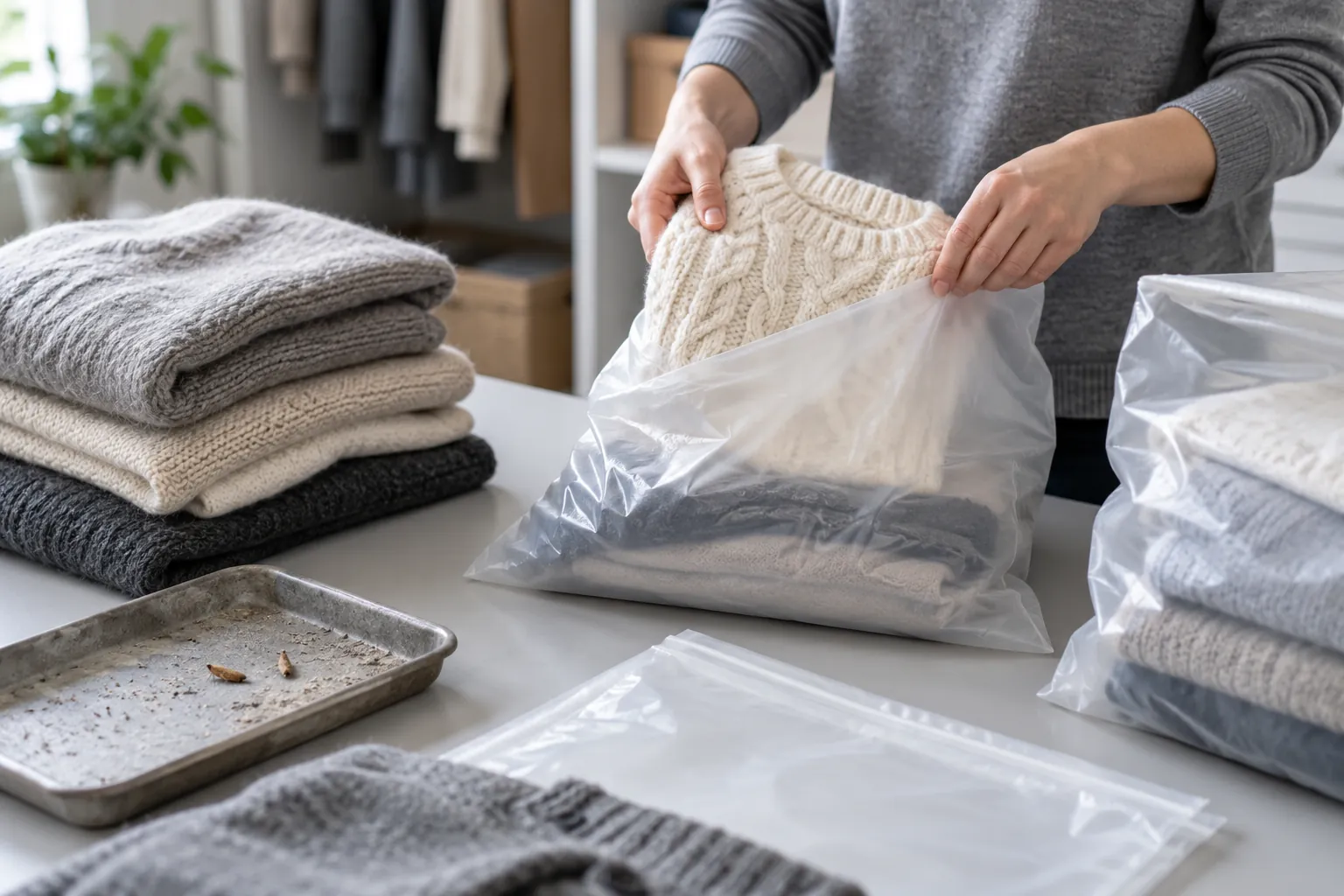
Possible measures may include appropriate textile handling, removal of accessible lint and debris, monitoring and targeted treatment of relevant sheltered areas. No particular insecticide or specialist method is confirmed in advance. The material, identified pest, extent of activity and access guide the proposal. Ask which part of the work addresses larvae or harbourage and which part is intended to show whether activity continues.
A species-appropriate monitoring device can be useful, but catches of adults do not on their own remove a larval source in fabric. The device type and interpretation need to suit the pest identified. Similarly, treatment of a storage base cannot make an unassessed delicate garment safe to wash. The inspection-led approach keeps these decisions separate so that equipment, material handling and any product precautions serve a defined purpose.
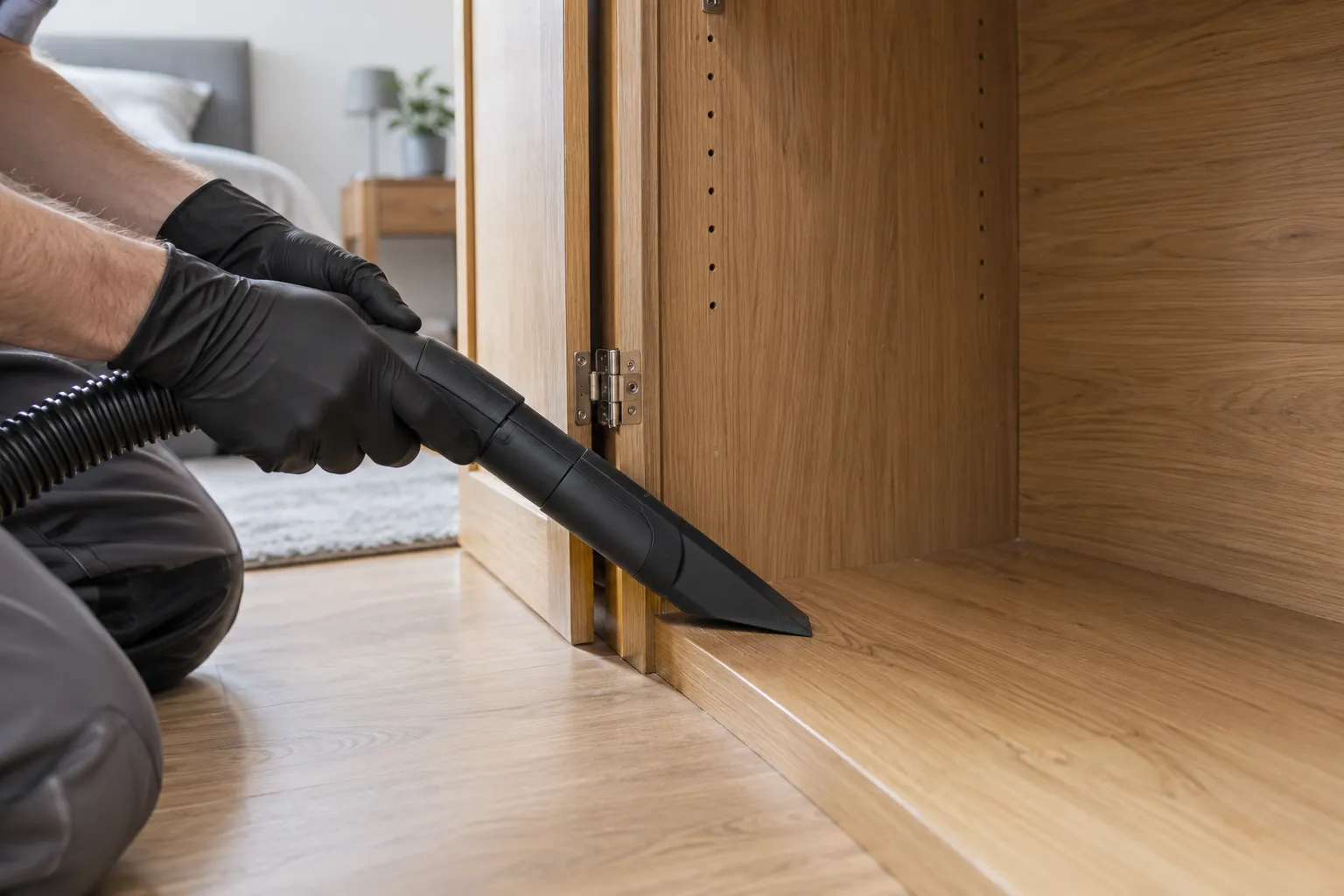
Work through storage and furniture in an agreed order
Before work begins, confirm which storage spaces and items are included and how affected contents will be handled. Garments or furnishings may need to be removed, contained or prepared in a particular way. Do not assume that every fabric can accept the same laundering or cleaning process. Care labels, finishes, dyes and construction can affect what is appropriate, especially for wool, upholstered pieces or valuable stored items.
The visit should explain any targeted control or monitoring positions and the limits of access beneath furniture or fitted storage. Ask what record will distinguish inspected areas from those still requiring preparation. If a room is used by several people, make sure they understand where items have been placed and which equipment must remain undisturbed. Moving a suspect textile back into an untreated storage area without discussion can complicate later interpretation of the findings.
Look for fresh damage and interpret monitoring carefully
Follow the instructions for cleaning, re-entry and any product or monitoring arrangement used. Do not move a trap simply to make a room look tidier, and avoid applying household sprays to textiles without discussing compatibility and the agreed plan. Keep a note of items cleaned, moved or returned to storage, because those changes can affect how later findings are interpreted.
At review, fresh larval evidence or new damage has a different meaning from an old hole that remains visible after the work. Monitoring results should be considered alongside the condition of the materials and any inaccessible source. A further visit may be appropriate to assess continuing activity or preparation completed after the initial inspection. Its purpose and cost should be clear rather than relying on an assumed fixed number of treatments for every moth enquiry.
| Part of the plan | Purpose | Important limit |
|---|---|---|
| Material handling | Manage affected fabrics appropriately | Care requirements differ between items |
| Targeted control | Address relevant harbourage where suitable | Does not assess every inaccessible textile |
| Adult monitoring | Help review identified activity | A catch alone does not locate or remove every larval source |
Make storage and inspection habits specific to the materials
The longer-term plan may involve suitable storage of cleaned vulnerable textiles, checking seldom-used garments and maintaining access to wardrobe bases or carpet edges. Recommendations should reflect the identified source and the way the household uses its storage. A sealed container is not evidence that an item placed inside it was free of larvae, and a cleaned room does not establish the condition of every stored fabric.
Review incoming second-hand textiles or furnishings where relevant and keep affected material separate until the agreed handling is completed. Avoid treating all adult sightings as proof of a new textile infestation without checking identification and location. The aftercare guidance explains the value of a dated record. That record makes a future review more useful than simply reporting that another moth has appeared somewhere in the property.
Define the textile and access work in the quotation
The quantity and type of materials, affected rooms, access beneath furniture, proposed control and monitoring or review arrangements can affect the price. A Southall moth-control tariff has not been authorised for publication. Ask which inspection and control tasks are included, whether textile cleaning is separate and how valuable or delicate items will be handled. Additional access or preparation should be discussed before it becomes an unexpected part of the visit.
Where fresh damage is affecting stored clothing or furnishings, call +44 20 3966 2383 with the postcode and a description of the materials and storage locations. Explain what has already been cleaned or sprayed. Availability and suitable next steps are confirmed during the enquiry without a fixed arrival promise. Avoid discarding items or moving loose suspect fabrics to another room while waiting for preparation instructions.
Questions about this service
Moth Control — questions
Does every moth in a bedroom damage clothes?
No. Identification and material evidence matter. Explain where the adult was seen and whether vulnerable fabrics show damage, so the enquiry does not assume that a moth near a light is the source of a garment problem.
Can a moth trap replace inspection of my wardrobe?
It may provide monitoring information when appropriate to the species, but it does not establish the condition of every garment or remove a concealed larval source. Storage and material checks remain separate tasks.
Should all wool garments be washed at one high setting?
No universal setting is appropriate for every textile. Follow the care requirements and the instructions for the agreed handling plan. Delicate items may need a suitable cleaning professional or another material-specific arrangement.
Why does the specialist ask what was stored under the bed?
The original position of a vulnerable textile can help trace damage and determine access needs. Moving it before the visit without recording its location can remove useful context from the source assessment.
Do old holes mean moth treatment has not worked?
A hole remains after the cause has been addressed. A review needs fresh damage, larval evidence or meaningful monitoring findings rather than the continued visibility of an existing damaged area.
Can fitted wardrobes be inspected completely?
Only accessible areas can be assessed. Explain fixed panels and any base or back that cannot be reached. The limitation may affect preparation, monitoring or recommendations for further access.
Discuss the findings.
Agree the next step.
Call with the affected rooms, your Southall postcode and the signs you have noticed.