
Pest control services · Southall
Silverfish Control Southall
Silverfish seen at a bathroom edge are a reason to inspect the insect and its surroundings, not proof that one cleaning product or moisture change will solve the problem. The enquiry considers identification, distribution, sheltered locations and the conditions that make the affected rooms useful to the insects.
- Silverfish appearance checked against the reported locations.
- Bathroom edges and accessible service voids examined.
- Paper storage and sheltered living areas considered where relevant.
- Moisture observations separated from unverified building defects.
- Monitoring and targeted control reviewed by room and date.
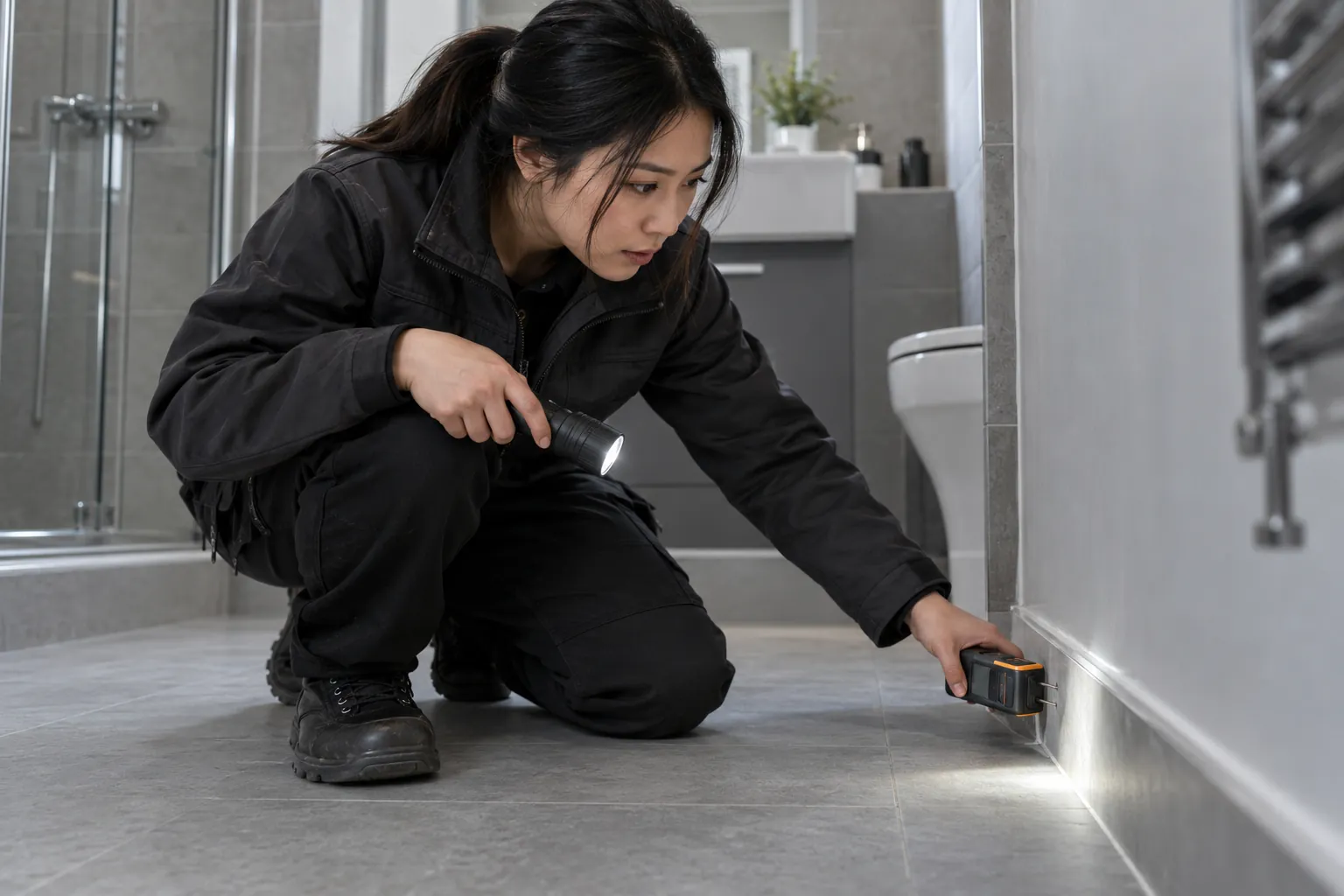
Identify the insect before labelling the room damp
Give a clear description or photograph of the insect and the location where it was noticed. Silverfish-like insects can differ in appearance and environmental preferences, so the enquiry should not rely solely on the fact that an insect runs quickly at a floor edge. Note whether sightings are confined to a bathroom or also occur in living spaces, cupboards or stored paper.
Some silverfish species can occur in less humid rooms, which makes identification and distribution important. A dry-looking bedroom does not automatically rule the problem out, just as one bathroom sighting does not prove a leaking pipe. Tell the specialist about recent building work, stored boxes and changes in room use. If the insect is identified differently, cockroach treatment involves another pattern of harbourage and monitoring rather than the same response with a different name.
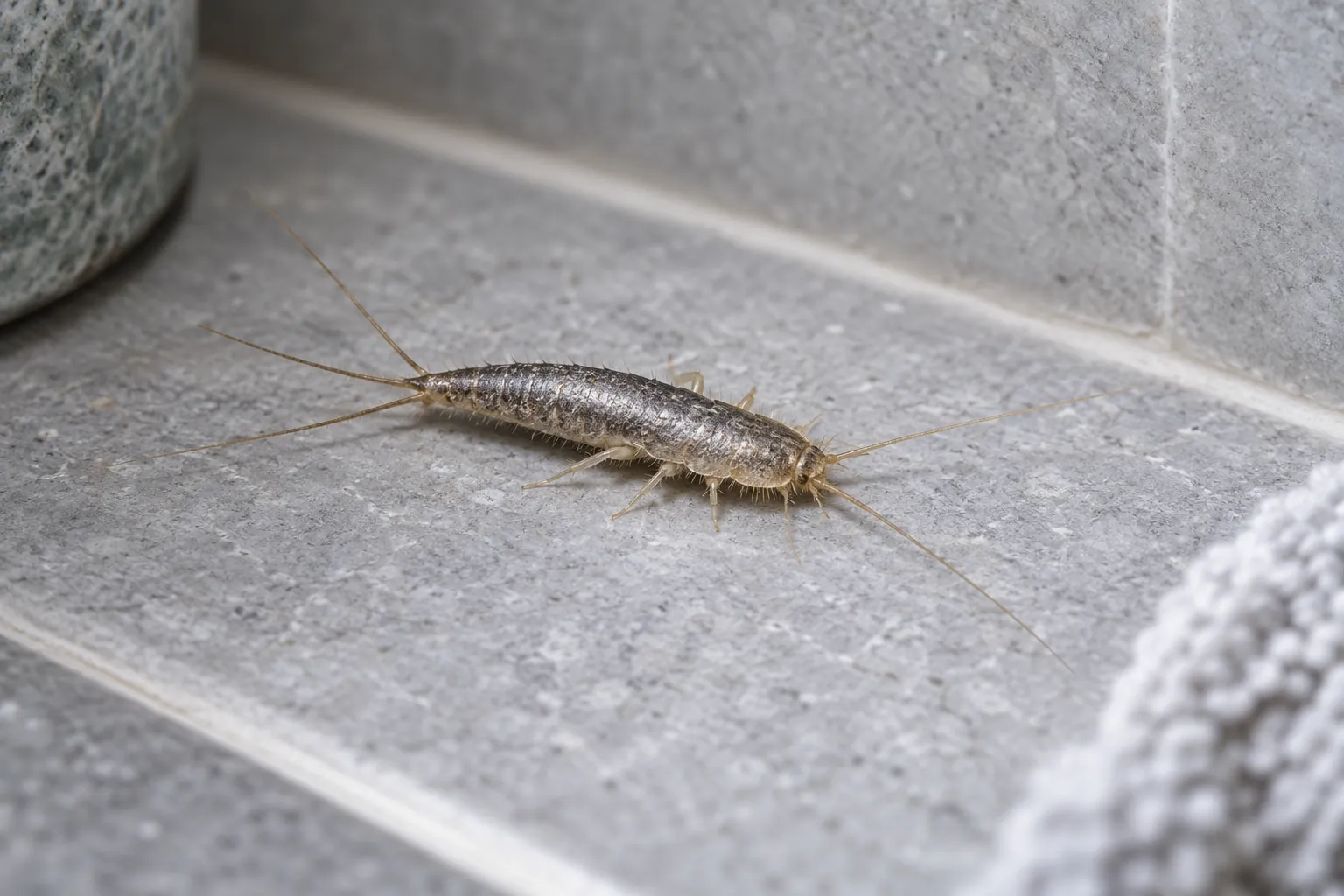
Separate moisture conditions from the extent of activity
The assessment may include discussion of ventilation, condensation, visible moisture and the way affected items are stored. A suitable meter or other observation can add information, but a single reading does not identify every underlying building defect. Explain any leak already being investigated and what work has been completed so pest recommendations do not duplicate or contradict the building-maintenance plan.
The distribution of insects can require a wider inspection than the room with the most obvious moisture. Record sightings in separate rooms rather than combining them into one general report. Identification may change how strongly humidity explains the pattern. The inspection process is intended to distinguish evidence, conditions and limitations, so the eventual recommendation can address the actual problem without assuming that every silverfish enquiry is a plumbing repair or a bathroom-only treatment.
Examine accessible edges, voids and stored materials
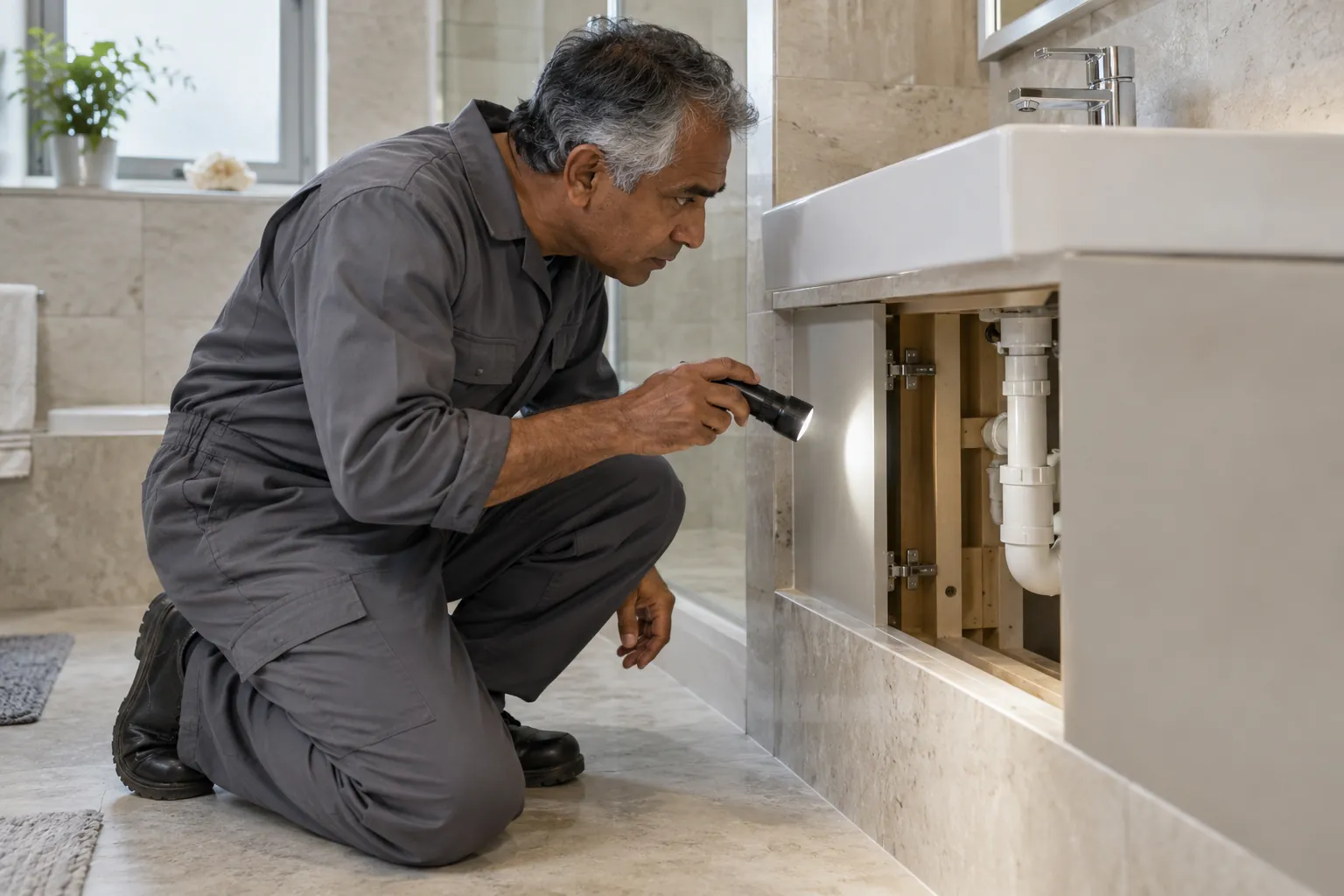
A torch and inspection mirror may help examine skirting joints, pipe boxing, the accessible space under a basin and sheltered cupboard edges. The inspection can also consider paper, cardboard and other relevant storage where sightings or damage support it. Ask which areas were examined and which remain inaccessible behind fixed fittings or a sealed panel.
The specialist should connect these observations with the reported activity. A gap is a possible harbourage or route, not automatic proof of the source. If an inspection requires a panel to be opened or belongings to be moved, a safe and authorised arrangement is needed. The record should make clear whether the inspection has assessed the actual concealed space or only the accessible edge around it, especially where further maintenance is proposed.
| Observation | What should be checked | Avoid assuming |
|---|---|---|
| Sightings at a bathroom edge | Identification, shelter and visible conditions | That a leak has been proved |
| Similar insects in a dry bedroom | Species and room-to-room distribution | That humidity alone explains every location |
| Damage around paper storage | Material condition and sheltered access | That raising one box removes the source |
Discuss monitoring, targeted control and environmental work
Possible options may involve monitoring at sheltered edges, suitable targeted treatment and changes to conditions or storage. The product and method are not confirmed before assessment. Ask what the proposed work is intended to establish or control, why the locations have been selected and which environmental recommendations are supported by observations. Moisture management can matter, but it should not be described as the sole answer without considering the identified insect and distribution.
Where an insecticide is proposed, its permitted use and precautions govern the application. Product placement in a bathroom needs to take account of access, cleaning, water and the people using the room. Devices used for monitoring also need to remain in agreed positions. Avoid adding powders, sprays or improvised traps without explaining them; they can change the evidence or create precautions that are not part of the assessed arrangement.
Clear sheltered storage and explain maintenance constraints
Preparation and access
Ask which cupboards, paper boxes and floor edges need access. Move loose items where safe, keeping suspect stored materials separate until their handling has been discussed. Raising a box from the floor may make inspection easier, but it does not establish that the contents are unaffected. Photograph evidence and note its original location before clearing or cleaning away the signs.
Household arrangements
Explain persistent moisture, a repair in progress or a room that cannot be taken out of use. Tell the specialist about products already applied around the affected area. Discuss preparation limits if fixed storage, a mobility issue or shared room use prevents the requested access. The practical arrangement should fit the household, rather than relying on the assumption that fittings can be removed or all stored paper can be handled in the same way.
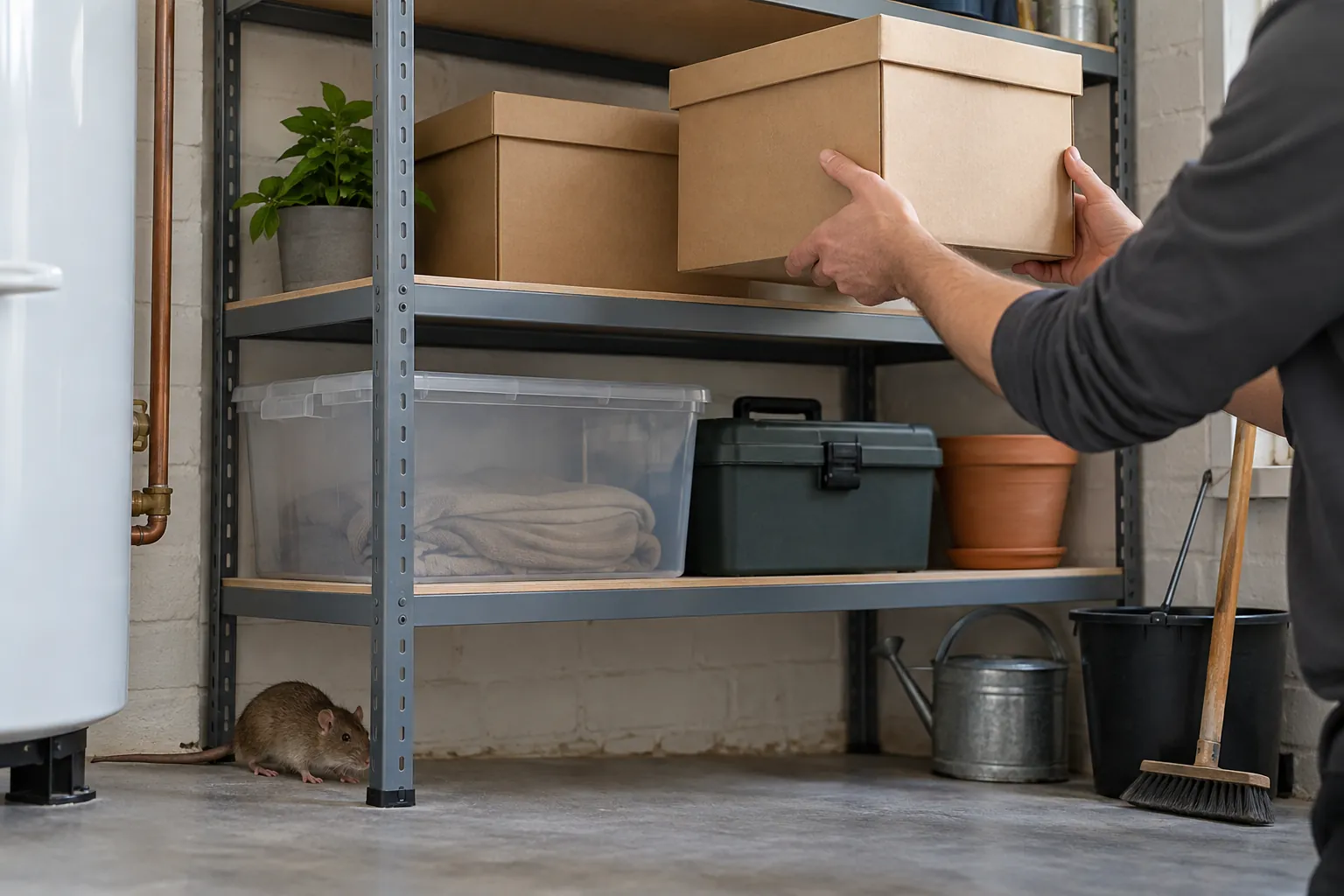
Work around the room’s ordinary use and fixed fittings
Before the visit, settle access to the affected edges and any storage that needs checking. A bathroom, utility room or cupboard may need to be available without occupants moving through the working area. The scope should explain which accessible spaces are included and whether an inaccessible void needs another arrangement. Do not assume the specialist will disconnect plumbing, remove fitted joinery or undertake a building survey as part of a pest visit.
The agreed monitoring or control positions should be explained at handover. Ask which locations can be cleaned normally and which need to remain undisturbed, particularly around a frequently used sink or floor edge. Make sure other occupants understand the arrangement, so equipment is not removed because it looks like clutter. Any limitation caused by access or a change in the proposed method should be recorded before the visit is treated as complete.
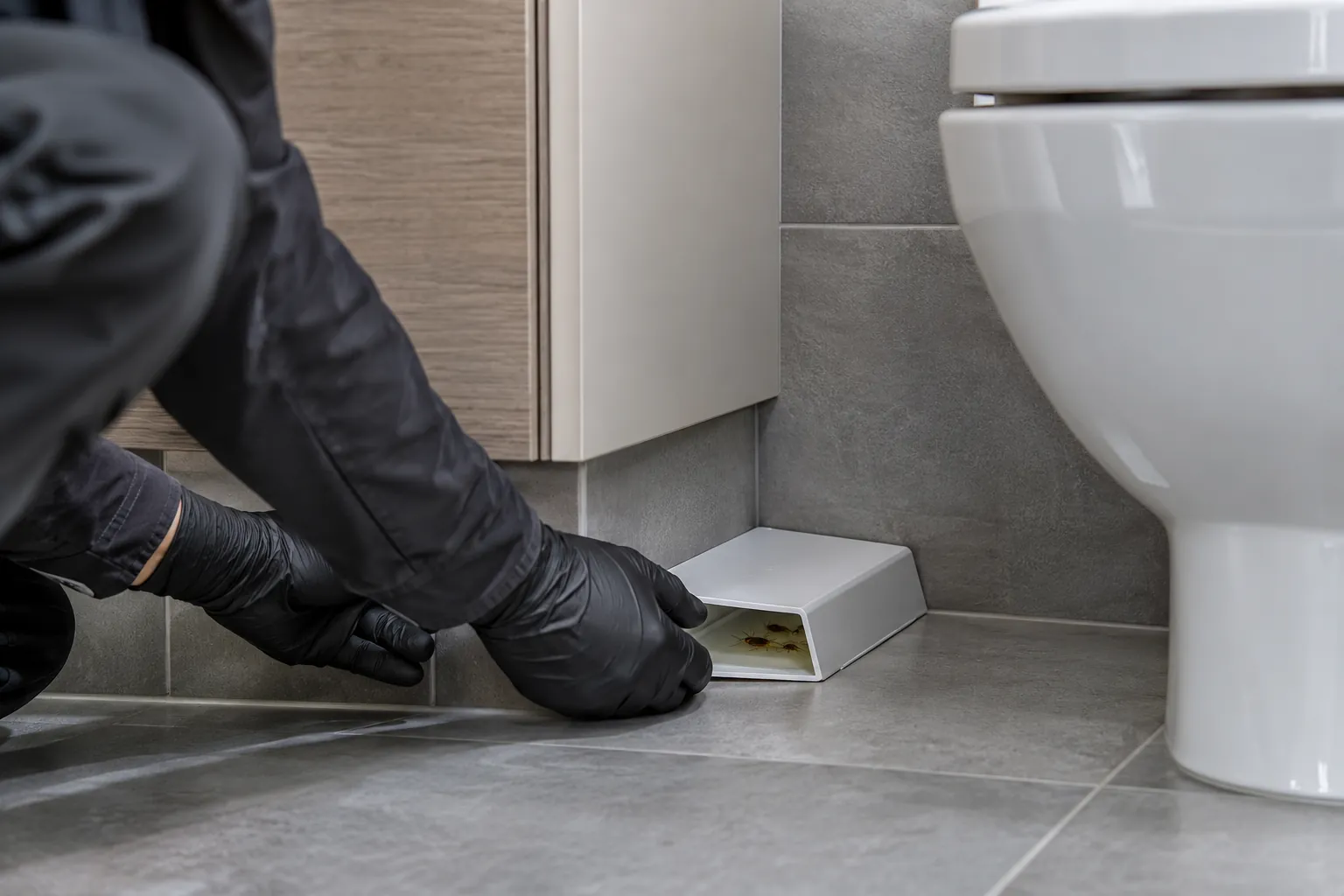
Compare activity in the same locations over time
Follow the instructions for any product or monitoring device used. Confirm cleaning, water exposure, re-entry or ventilation requirements where they apply, rather than assuming that all targeted treatments have identical restrictions. Report if routine bathroom cleaning removes a device or disturbs an agreed position. Without that information, a later review may compare conditions that are no longer consistent.
Record sightings by room and date and keep a note of ventilation, storage or maintenance changes. A review can then consider insect activity alongside the conditions that were altered. Further inspection or treatment may be useful where the evidence supports it, especially if the insects occur beyond the original room. The purpose should be explained instead of promising a fixed number of visits or concluding that one quiet period proves the source has been resolved.
| Part of the plan | Customer information | Review question |
|---|---|---|
| Monitoring position | Report cleaning or device disturbance | Can the findings be compared reliably? |
| Environmental change | Record ventilation, storage or repair work | Did activity change in the same locations? |
| Targeted treatment | Follow the specific product precautions | Are there findings outside the original scope? |
Make environmental recommendations evidence-based
Recommendations can include appropriate attention to visible moisture, ventilation, sheltered clutter or the storage of susceptible paper and packaging. A plumber or building professional may be needed where a specific maintenance concern has been identified, but the pest enquiry should not be presented as certification that a building is dry or defect-free. Keep the record of what was observed and who is arranging any further investigation.
For longer-term review, retain the original insect photographs and room locations. This helps determine whether later sightings involve the same pattern or need a fresh identification. The Southall aftercare information explains why method-specific instructions and dated observations are more useful than an assumed universal treatment interval. Continue discussing findings if activity is seen in dry living areas rather than repeatedly applying a bathroom-only explanation without checking the species and scope.
Quote for the affected rooms and accessible spaces
The number and type of rooms, hidden-space access, relevant stored materials, proposed method and monitoring or review arrangements can affect the quote. A Southall silverfish tariff has not been confirmed for publication. Ask whether the initial price includes inspection and control, what environmental work is recommended and which building repairs would remain separate. Inaccessible pipe boxing can affect the investigation even in a small room.
Call +44 20 3966 2383 with the postcode, locations and a description of any insect evidence or visible moisture. Explain if the room must remain available or a repair is already scheduled. Appointment availability and next steps are confirmed during the enquiry. Avoid combining treatments or removing fixed panels while waiting for the access and preparation arrangement to be discussed.
Questions about this service
Silverfish Control — questions
Does finding silverfish prove there is a leak?
No. Moisture conditions may be relevant, but an insect sighting does not diagnose a concealed plumbing defect. The inspection should distinguish what is visible from a concern that requires a separate building or plumbing assessment.
Why are similar insects appearing in a dry room?
Identification may change the environmental explanation, because some silverfish species tolerate less humid conditions. Record the separate room locations and obtain a clear photograph rather than assuming the bathroom is the only area involved.
Can a humidity reading replace the insect inspection?
It provides one piece of information about conditions, not a complete account of the pest or its distribution. Identification, sheltered spaces and the affected materials still need consideration before selecting a plan.
Should paper storage be included in the enquiry?
Mention it where sightings or damage make it relevant. Explain the original location of boxes and documents before moving them, so the specialist can assess shelter and materials without losing useful context.
Will the visit include removing bathroom boxing?
Do not assume invasive access is included or appropriate. Explain how the panel is fixed and who can authorise opening it. The inspection may record a limitation or require a separate safe access arrangement.
Can I throw away a monitoring device when cleaning?
Check its purpose first. Its location may be needed for a consistent review, and removal can make results harder to interpret. Tell the specialist if ordinary room use or cleaning makes its position impractical.
Discuss the findings.
Agree the next step.
Call with the affected rooms, your Southall postcode and the signs you have noticed.