
Pest control services · Southall
Rat Control Southall
Rat control starts with the connection between activity outside and evidence inside. Describe the rooms, garden areas or waste storage affected so an inspection can distinguish accessible entry points from possible drainage or neighbouring sources. The findings determine what can be addressed during the agreed visit.
- Garden runs and burrow locations considered with indoor evidence.
- Drain surrounds and accessible building openings examined.
- Waste storage and neighbouring access issues identified.
- Control positions assessed for people and non-target animals.
- Review arrangements linked to routes and monitoring findings.
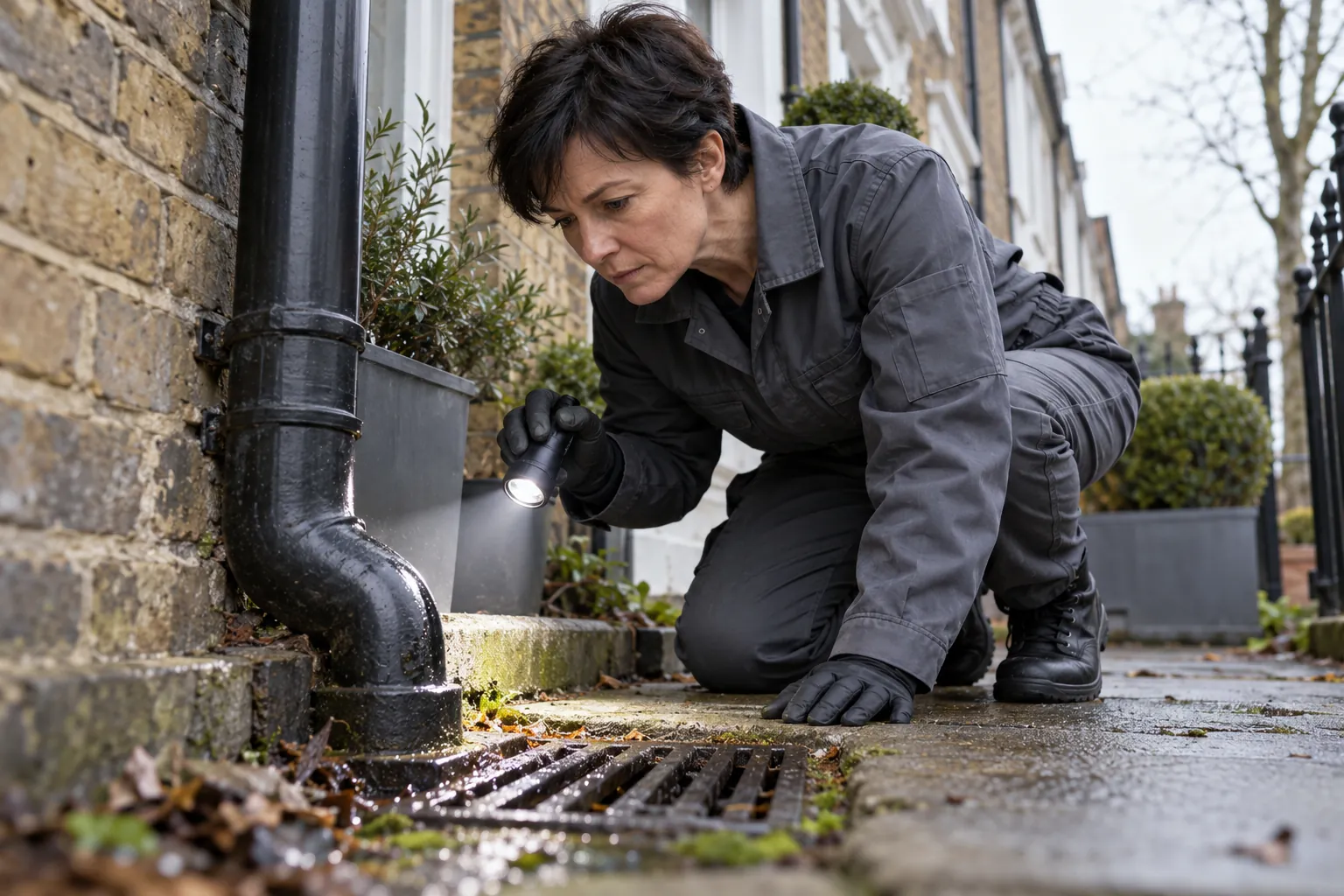
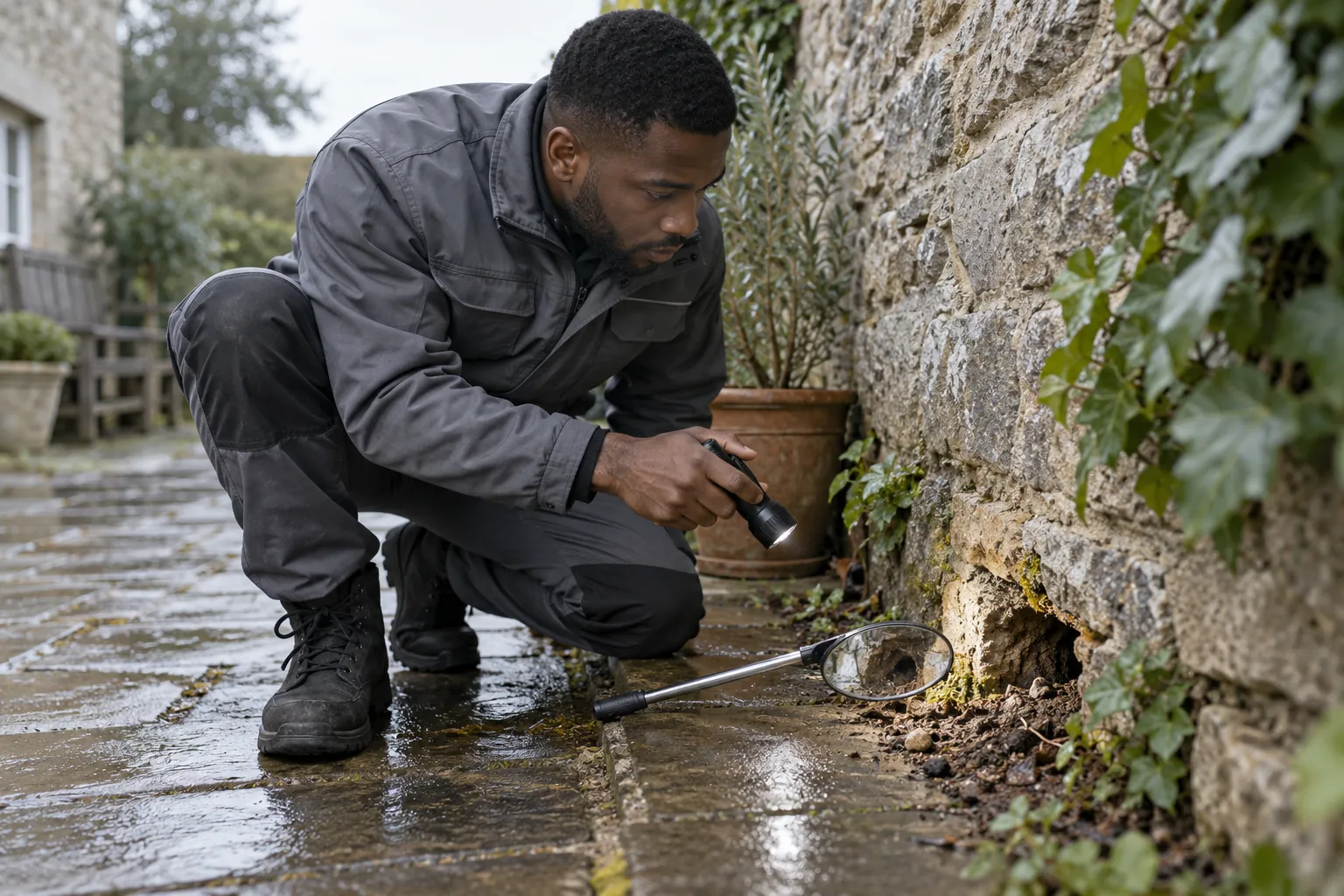
Inspect the boundary, openings and accessible drains
The inspection may cover accessible garden edges, storage areas, the bases of outbuildings and openings into the house. A torch and mirror can help examine concealed edges without making unsupported claims about the interior of a wall or pipe. Burrows and worn routes are considered alongside droppings and sightings. Where vegetation, stored materials or a locked gate prevents a useful check, the limitation should be recorded and discussed.
A damaged drain surround or evidence near a drainage route can justify further investigation, but it does not by itself confirm a defective underground pipe. A specialist drainage survey may need separate equipment, permission and pricing. Ask what was directly observed and what is a possible explanation. This distinction matters when a landlord, managing agent or drainage contractor is asked to act on a report; an inspection finding should not become an unverified diagnosis of the whole drainage system.
Place each sighting on the property plan
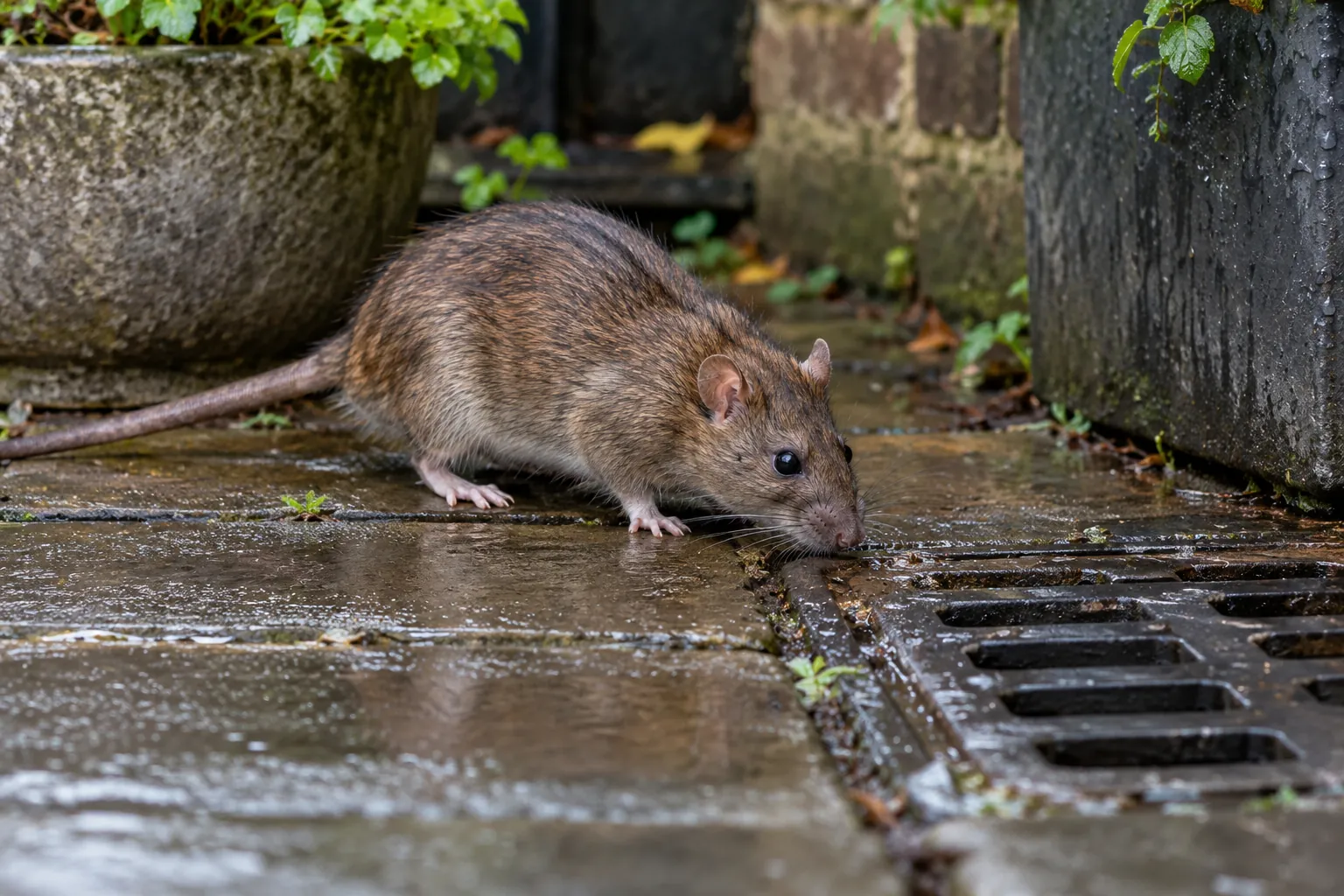
A rat at the bottom of a garden presents a different enquiry from repeated activity beneath a kitchen floor. Give the locations separately, with dates and photographs where possible. Mention droppings, disturbed soil, gnawing and noises without assuming that each sign has the same source. The specialist can then decide which external and internal areas need attention, rather than starting with an arbitrary number of boxes around the boundary.
Explain whether there are shared gardens, adjoining commercial premises or communal bins. These details do not prove the source, but they can affect access and the usefulness of work confined to one address. If evidence is small and concentrated around kitchen cupboards, a mouse inspection may be more relevant. Clear identification prevents an external rat problem being confused with a different animal moving through an indoor service void.
| Observed location | Inspection question | Possible next step |
|---|---|---|
| Burrow near a boundary | Where does the route continue? | Assess adjacent access and food sources |
| Evidence beside a drain surround | Is the visible defect connected to activity? | Discuss whether a drainage specialist is needed |
| Fresh indoor signs | Which openings connect to this room? | Assess the building route and suitable monitoring |
Distinguish the area of activity from the source
The proposed scope should explain which indoor rooms and external locations are affected. Rats may travel between a food source, shelter and the point at which they are seen, so the most visible location is not necessarily the best control position. The specialist should consider how the areas connect and whether monitoring is needed to clarify movement before committing to a particular approach.
Describe delivery areas, food preparation, animal feed and waste collections if they are relevant to the premises. In a business, the person arranging treatment may need to coordinate with the person responsible for maintenance or cleaning. In a block of flats, an accessible private garden does not give authority to inspect a neighbouring void. The resulting plan should separate work that can be agreed immediately from access or repairs that depend on someone else.
Carry out and record the agreed work
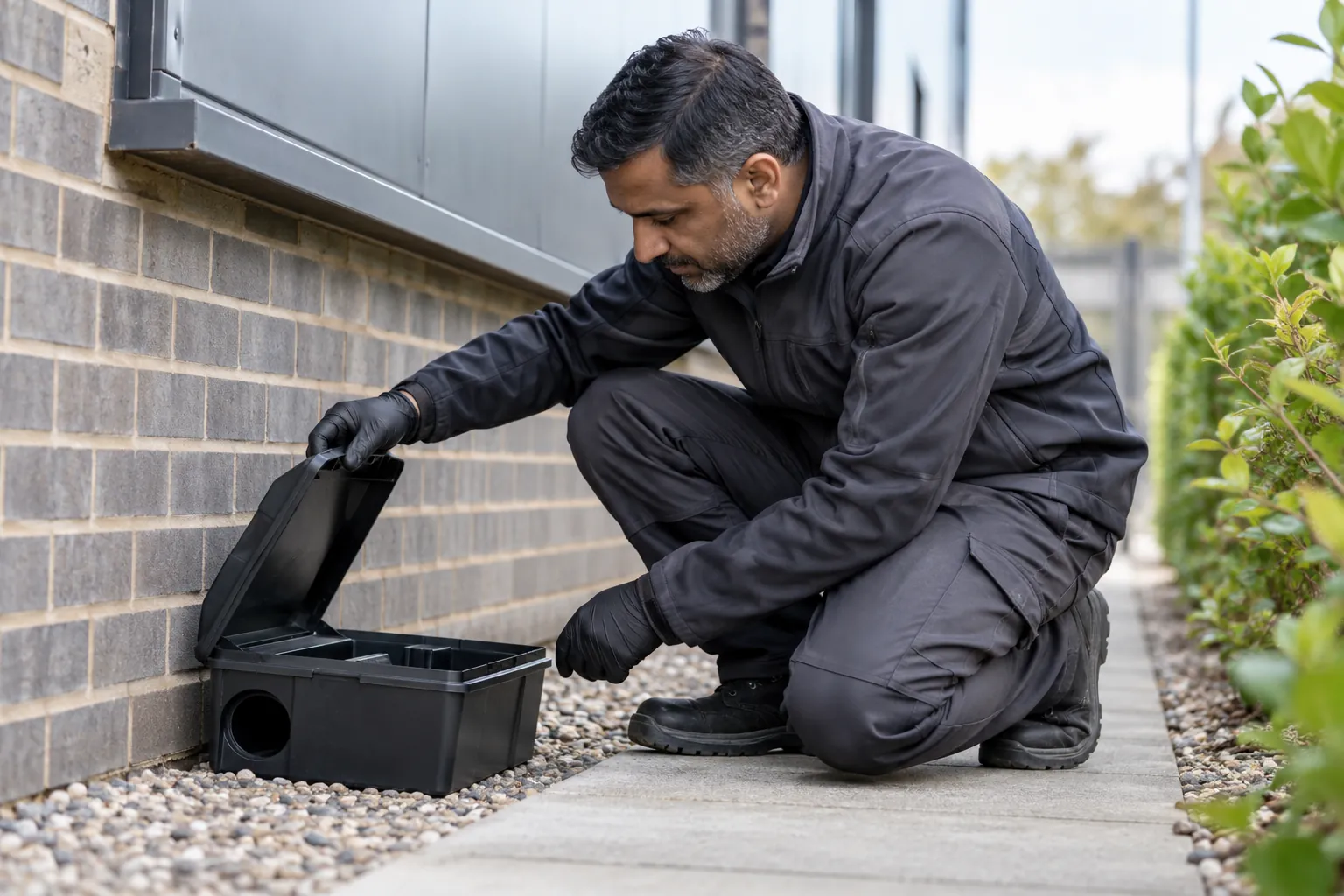
Before equipment is positioned, confirm the accessible areas and any activity restrictions. The specialist may record a location plan, inspect existing devices or agree an initial monitoring arrangement. Ask which items are being used for control and which are intended to gather evidence. The locations, findings and practical restrictions should be understandable to the person who remains responsible for the property after the visit.
Do not move equipment because it appears unused, and ensure gardeners, cleaners or other occupants know which locations must remain undisturbed. A planned repair or bin-store clean may need to be coordinated with the review. Where immediate work cannot address an inaccessible drain or neighbouring source, the report should say so. It is more useful to define that limit than to describe a perimeter treatment as resolving every possible route into the building.
Select a control approach with the surrounding risks in view
Possible approaches include suitable trapping, monitoring, assessed rodenticide use and measures that restrict access or food availability. Ask how the proposed equipment or product placement relates to the observed rat routes and non-target risks. The recommendation follows the evidence and the risks at the location. Ask why the chosen positions are appropriate and how the plan deals with non-target animals, children, pets and people who use the area.
A control device outdoors needs a different placement assessment from one in a restricted internal void. It must not create an avoidable risk where a child, dog or other animal can interfere with it. If rodenticides are proposed, permitted use, product instructions and relevant stewardship requirements govern the work. Clarify checking arrangements and reporting responsibilities. Adding household bait elsewhere can undermine that record and introduce risks that the original assessment did not cover.
Make outdoor and indoor inspection areas accessible
Provide a safe route to the garden, outbuildings, affected cupboards and any agreed service access. Unlock gates or arrange permission in advance. Mention loose paving, difficult steps, poorly lit spaces and areas where stored items prevent inspection. The specialist should not have to rely on the householder moving heavy equipment or opening a restricted drainage cover without an agreed safe arrangement.
Secure food and animal feed, and keep pets away from the working areas during the visit. Avoid digging out a suspected burrow, disturbing nesting material or sealing an apparent active route before receiving instructions. Photographs and a written sighting record can preserve useful information while limiting disturbance. Discuss access before the appointment if a communal gate, tenant permission or business opening time limits what can be inspected.
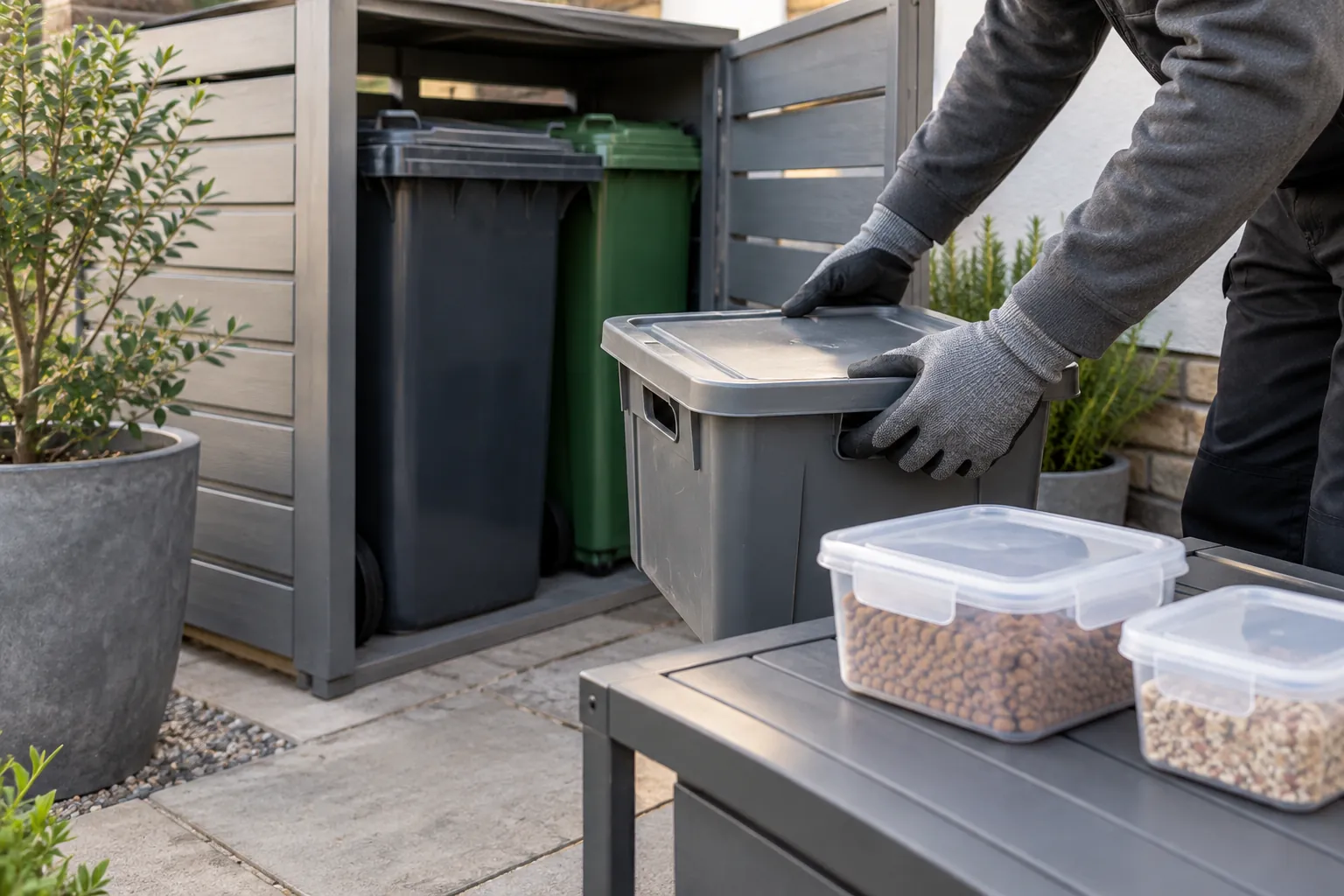
Coordinate food, waste and building repairs
Longer-term recommendations may involve bin storage, food spillages, door gaps, damaged vents or structural openings. Each recommendation should relate to an observed risk or a clearly identified limitation. A pipe repair or large opening may need a separate tradesperson, while waste arrangements may be controlled by a business manager or communal contractor. Clarify who is responsible, what can be changed immediately and what should wait for the review.
Closing an opening without considering animal activity can create a different access problem, so proofing needs to fit the control plan. Equally, repeated equipment placement will not repair a persistent structural defect. Keep the location record and photographs available when maintenance is arranged. For the wider range of confirmed services, the Southall pest control overview can help if evidence from another part of the property points to a different pest.
Review activity against the original route assessment
A review should compare new sightings and device findings with the locations identified during the first inspection. Record changes in the area affected, not just whether a rat has been seen somewhere on the premises. A sighting close to the boundary may have a different meaning from fresh evidence inside a room that was previously clear. Report equipment damage or disturbance promptly so the record remains useful.
A follow-up may be appropriate to check control positions, assess continuing access or review repairs. Its timing and scope depend on the method and findings; a fixed clearance period is not promised. Avoid independently increasing bait or adding another contractor’s products while the arrangement is being assessed. The general after-treatment guidance explains why the specific instructions issued for the agreed work take priority over generic cleaning or re-entry advice.
| Area | Customer arrangement | Review evidence |
|---|---|---|
| Outdoor control positions | Keep equipment undisturbed and pets away | Record new runs or sightings |
| Shared waste space | Arrange authorised access and cleaning coordination | Note recurring food or storage problems |
| Building defects | Confirm who authorises repairs | Compare activity before and after agreed work |
Quote for the investigation that is actually needed
Rat-control pricing depends on affected areas, access, equipment, review visits and whether proofing or drainage work is proposed. A quotation should set out the accessible areas, proposed control measures and any agreed review work. Ask whether the quotation covers an inspection, an initial control visit or a defined programme, and which further work would need separate approval. A drainage survey should not be assumed to form part of an ordinary visual inspection.
For urgent activity in a kitchen, workplace or occupied room, call +44 20 3966 2383 with the postcode and the exact circumstances. Explain whether the issue is indoors, outside or both, and mention access restrictions. Give the postcode, current signs and access arrangements so appointment availability can be confirmed during the enquiry. Keep affected food protected and follow any instructions given while waiting rather than changing control positions or disturbing suspected routes.
Questions about this service
Rat Control — questions
Does a rat beside a drain prove the drain is broken?
No. Its location is a reason to examine the surroundings and consider the route, not proof of a defect below ground. Ask whether a separate drainage investigation is recommended and what evidence supports it.
Will the garden need to be dug up?
Excavation is not assumed as part of the enquiry. The initial assessment considers accessible evidence and limits. Any invasive investigation or repair requires a separate explanation of its purpose, access and scope.
Can outdoor devices be moved for gardening?
Agree this before work begins. Their positions may be part of a route assessment, and movement can affect checking or expose equipment to interference. Tell the specialist when maintenance is planned.
What if rats are seen on the neighbouring land?
Explain where they are seen and who can authorise access. Work at your address cannot verify or control an inaccessible neighbouring source. A coordinated inspection or maintenance arrangement may be necessary.
Is waste collection enough to resolve the problem?
Improving waste arrangements can reduce an attractant, but it does not confirm the condition of entry points or shelter. The inspection should consider the whole route and how activity is monitored after changes.
Should I close a rat hole before the visit?
Ask first. The opening and its timing may matter to the assessment and control plan. Preserve a photograph and its location without disturbing it, then discuss appropriate proofing after the route has been considered.
Discuss the findings.
Agree the next step.
Call with the affected rooms, your Southall postcode and the signs you have noticed.