
Pest control services · Southall
Flea Treatment Southall
A flea enquiry should connect insect evidence with the places where people or animals rest and where activity is noticed. Carpets, upholstered furniture and bedding may need different preparation. Describe the rooms affected and any pet or occupancy history so the inspection can establish a suitable scope.
- Carpets and resting areas assessed for flea evidence.
- Upholstered furniture considered alongside floor activity.
- Pet-care arrangements kept separate from room treatment.
- Vacuuming and textile handling planned before the visit.
- Further emergence reviewed against the insect life cycle.
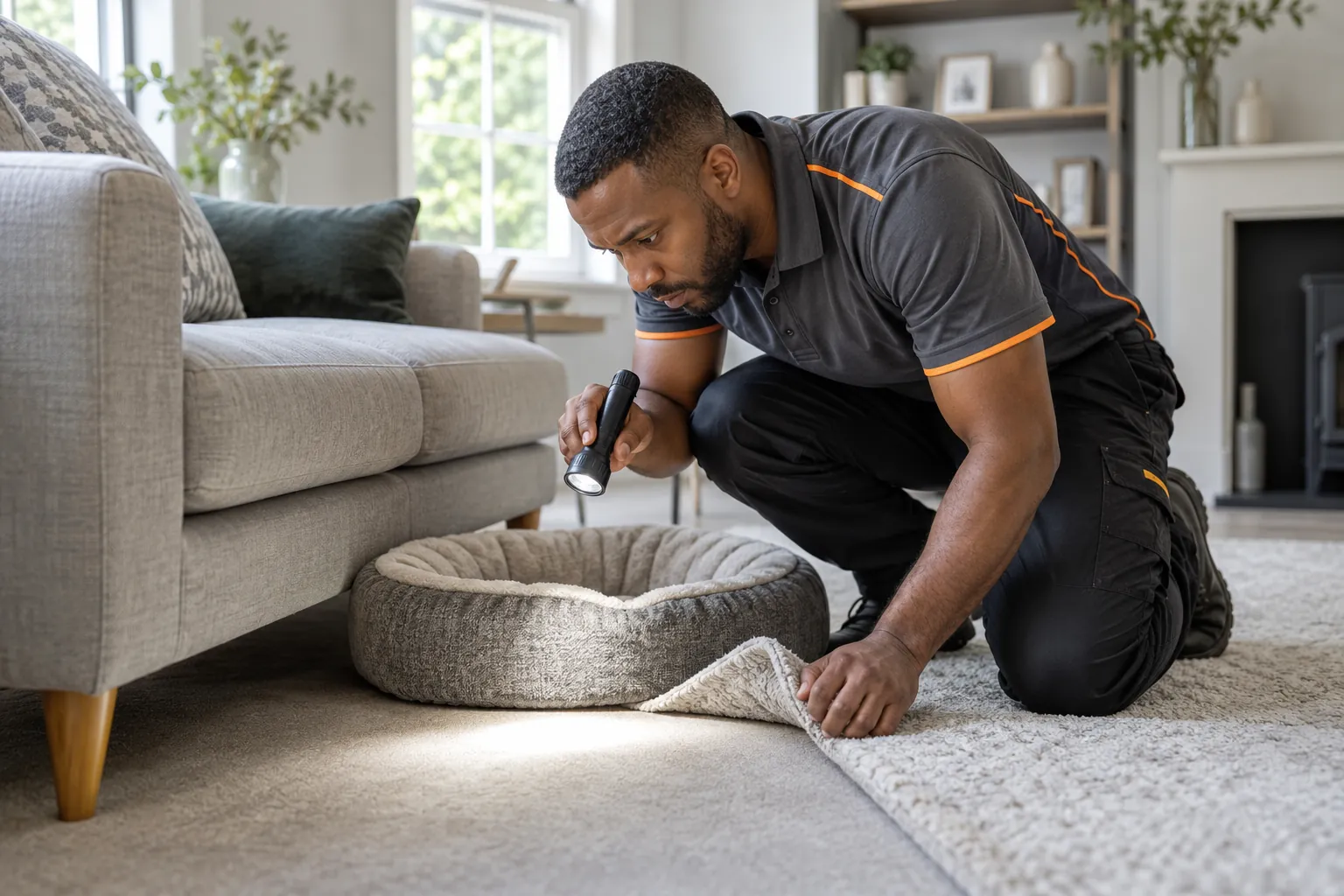
Prepare floors and pet textiles in the right sequence
Preparation and access
Ask which carpets, upholstery edges and resting areas should be vacuumed or made accessible before the visit. Discuss how vacuum contents and affected textiles should be handled rather than redistributing them through the property. Washing or drying instructions must suit the items and their care requirements. Keep a note of the preparation completed so the treatment record reflects what was actually available.
Household arrangements
Make veterinary enquiries separately where pets are involved, and tell the pest specialist about the arrangements relevant to the premises. Do not apply a room-treatment product to an animal or assume all pet products are interchangeable. Discuss preparation constraints if animals cannot be accommodated elsewhere, a room must remain in use or heavy furniture prevents the access requested. The plan may need adjustment rather than leaving those issues until the visit begins.
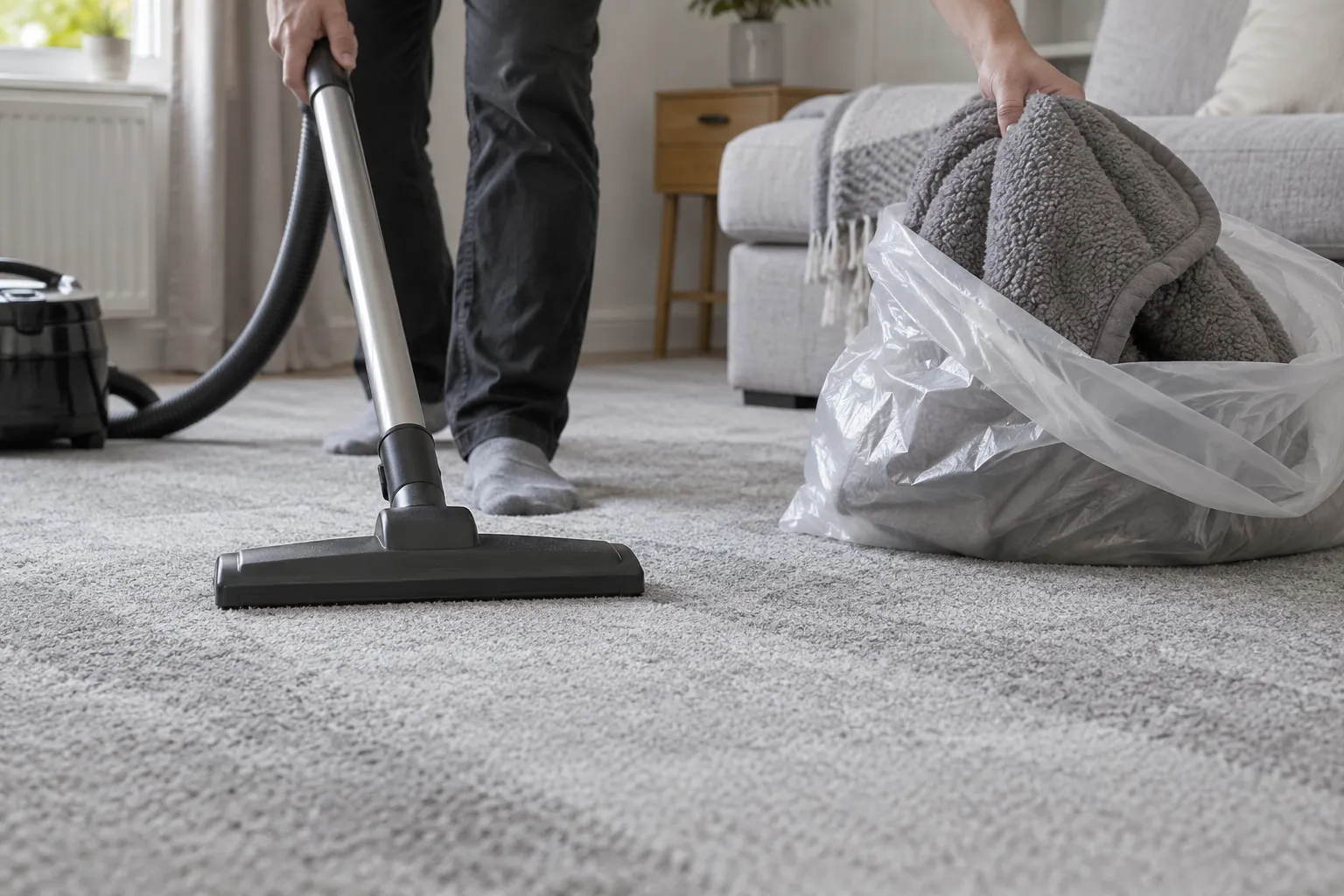
Locate the activity rather than judging it from bites
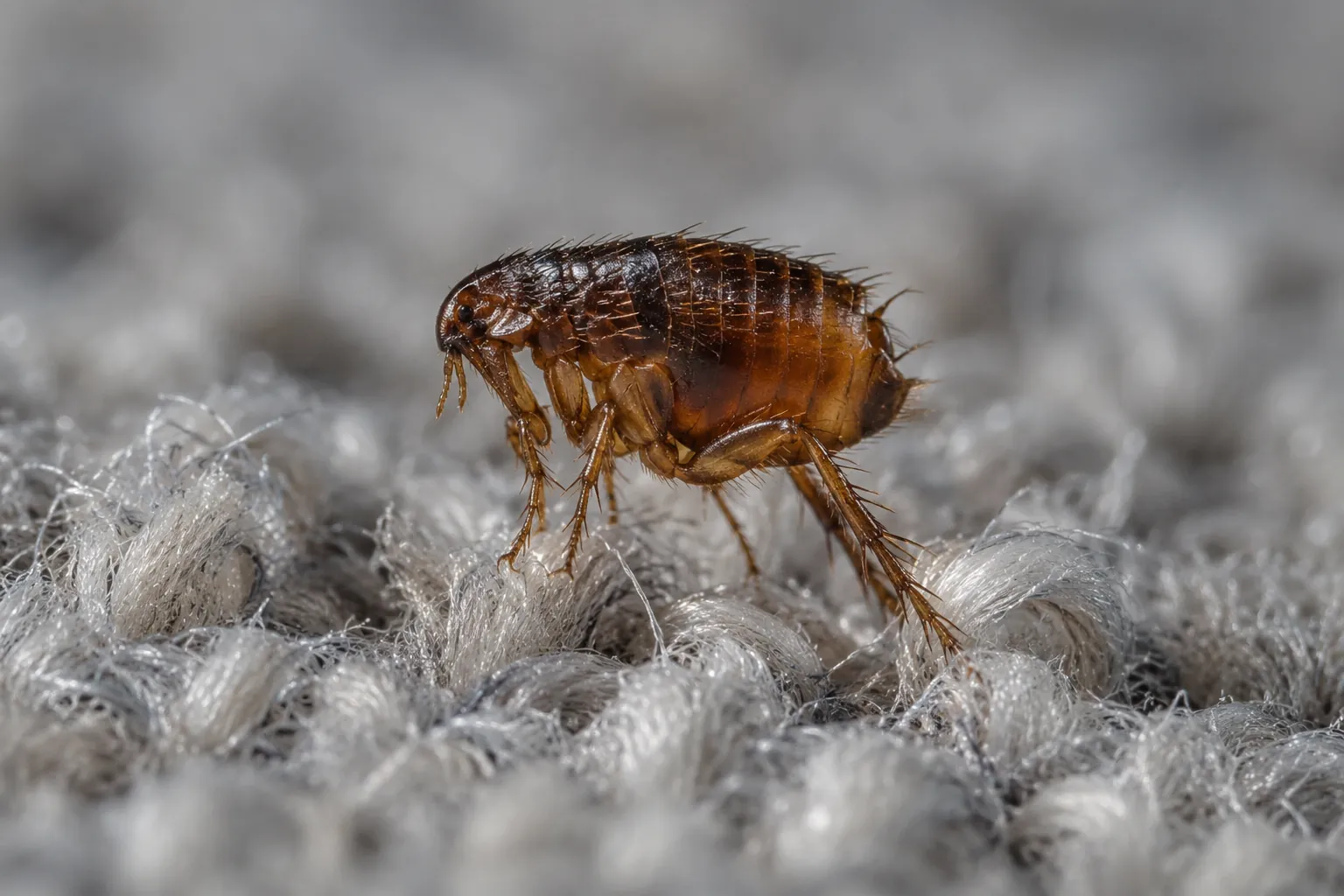
Explain where jumping insects have been seen and whether a clear specimen or photograph is available. Keep the locations distinct: a carpet beside a sofa, a room with pet bedding and an empty property may require different investigation. Skin reactions are not a reliable way to identify fleas, so the enquiry should not begin with a treatment selected solely from a description of itching.
Mention when the rooms were last occupied and whether animals have used them, without assuming that a current pet is the only possible explanation. Activity may be noticed after a period of vacancy, and the history can guide checks of protected resting locations. If identification instead points to a sleeping-area insect, bed bug treatment concerns a different inspection pattern. Establishing the insect avoids applying the wrong preparation plan to carpets or furniture.
Connect resting places, fabrics and occupancy history
Describe where pets sleep, whether they use upholstered seating and which rooms have been closed or unused. A household may need to coordinate treatment of environmental areas with veterinary advice for animals, but these are separate responsibilities. Do not assume that a premises treatment includes veterinary treatment or that a product intended for a room can be used on a pet.
In a rented home, the previous occupancy history may be incomplete. Give the facts available and arrange access to affected rooms before the visit is booked. Furnishings left in the property or items moved between rooms may affect the investigation, without proving where activity began. The inspection-led service approach is useful here because the plan should distinguish observed activity from a plausible but unconfirmed source.
| Reported situation | Areas to consider | Information to provide |
|---|---|---|
| Activity near pet bedding | Resting area, surrounding carpet and upholstery | Animal use and textile handling history |
| Insects after a room was vacant | Sheltered floor areas and retained furnishings | Dates of vacancy and reoccupation |
| Concern based on bites alone | Identification before selecting a method | Clear insect evidence if available |
Inspect the places that support environmental activity
The inspection may consider accessible carpet edges, rugs, gaps beside skirting, pet resting spots and soft furnishings. A torch and close examination can help relate sightings to sheltered locations rather than assuming every floor surface has the same level of activity. Explain which furniture can be moved safely and which areas cannot be reached without help or a separate arrangement.
Flea life stages do not all behave in the same way or occupy the same place. The scope therefore needs to consider the room environment alongside any relevant animal-care arrangements. Ask what evidence has been found, which areas are proposed for treatment and which are being checked because they connect to the report. A broad statement that the entire house has fleas should not replace a location-based inspection and an explanation of its limits.
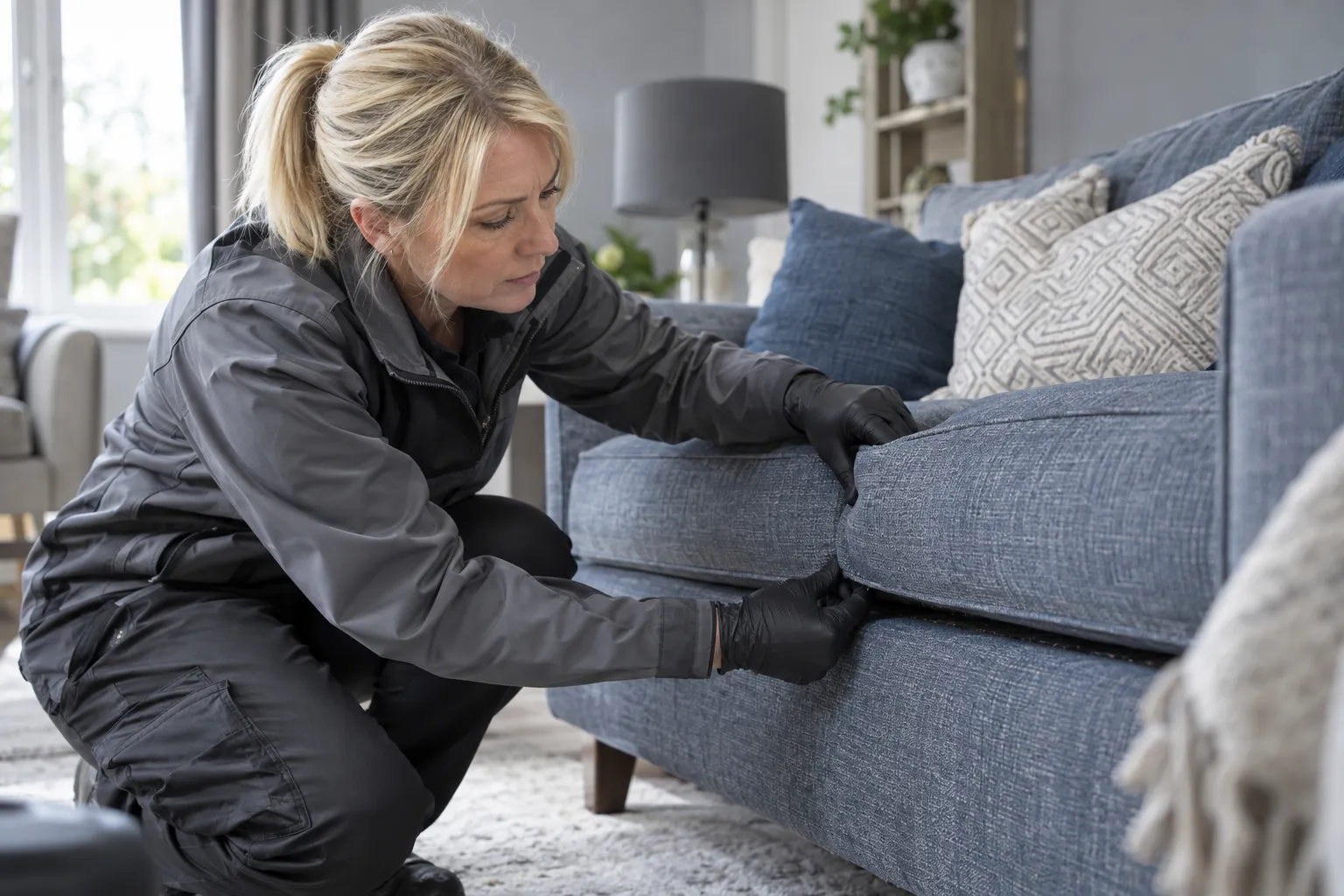
Select a treatment that fits the environment and access
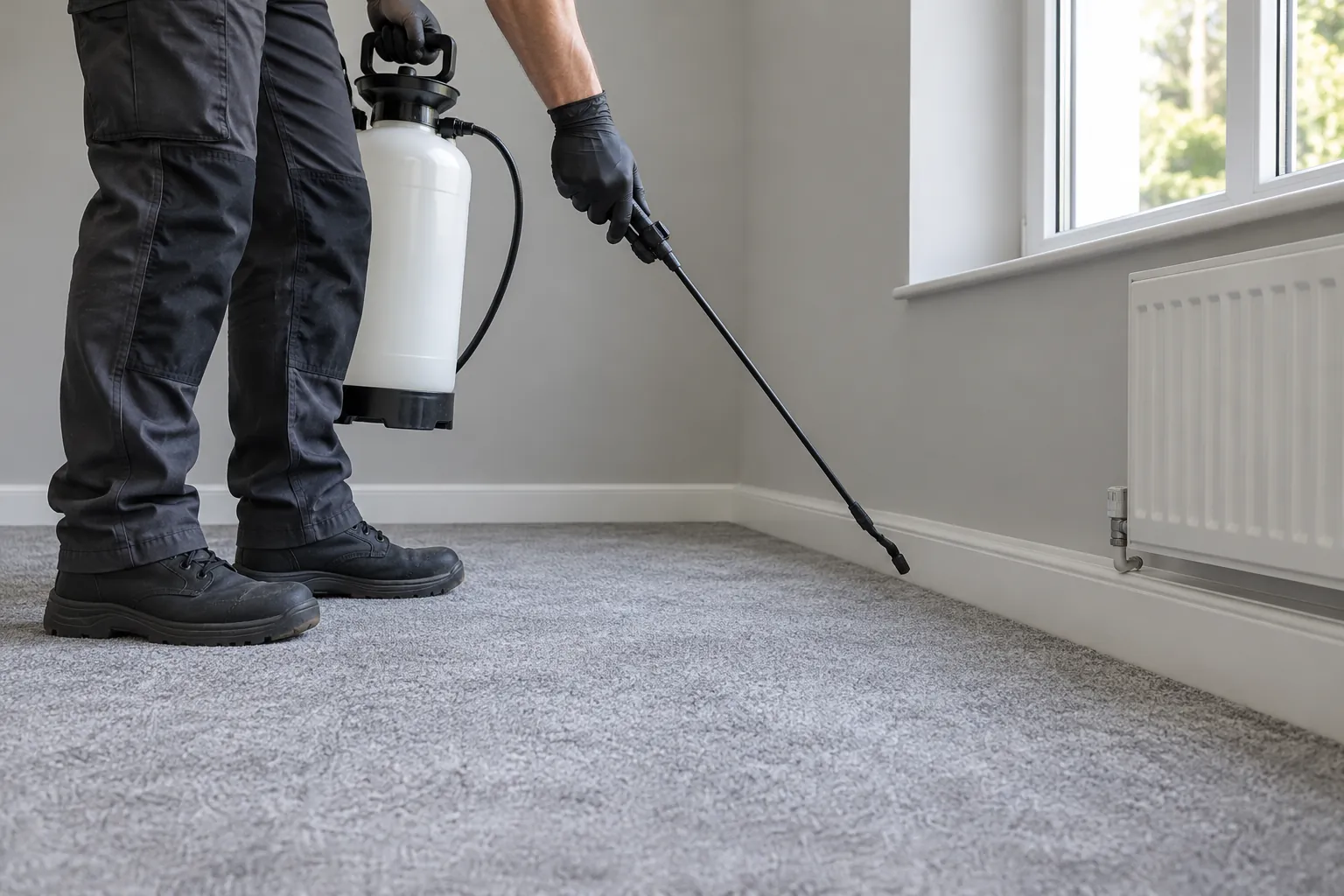
Possible work can involve preparation of floors and textiles, suitable professional treatment of agreed areas and a plan for reviewing continued activity. The actual product and application are selected after assessment, taking account of the surfaces, occupants and household precautions. Ask which areas are included, what the method is intended to address and how household circumstances affect the proposal.
Some protected life stages can lead to later adult emergence, which is one reason aftercare and review arrangements matter. It does not justify a universal promise about how quickly all activity will stop. The specialist should explain how sightings will be interpreted and when to report them. Avoid independently adding household sprays or changing preparation steps, because the product precautions and the treatment arrangement need to remain understandable and consistent.
Coordinate access to carpets and soft furnishings
Before work starts, confirm which floor edges, furniture bases and other affected areas are accessible. Loose items may need to be moved according to the preparation instructions, while heavy furnishings require a safe arrangement. Do not assume the specialist can move every item or treat an inaccessible surface without its limitations being recorded. Ask what can be completed during the agreed visit and what depends on further preparation.
Where a product is used, its instructions determine relevant precautions, restricted access and drying or ventilation arrangements. People, pets and aquariums need specific consideration. The person responsible for the property should understand which rooms have been included and what happens after the specialist leaves. In a shared home, communicate the instructions to other occupants so they do not re-enter, clean or move belongings on assumptions based on a different treatment.
Interpret new activity with the treatment plan
Follow the instructions for re-entry, cleaning and any return to normal vacuuming. The appropriate timing depends on the method used and should be given for the actual visit. Do not rely on a standard waiting period found elsewhere or assume that a room is ready because it looks dry. Make sure everyone using the affected areas knows which precautions remain in place.
Record further insects by room, date and resting area. The review should consider possible later emergence, preparation, animal-care coordination and any unassessed source. A further inspection or treatment may be appropriate where findings support it; it is not a fixed promise that every case needs the same number of visits. Report the evidence rather than applying another product immediately, so the next step can be chosen with the original method and restrictions in view.
| Responsibility | Confirm for the visit | Separate consideration |
|---|---|---|
| Floor and textile preparation | Vacuuming, access and containment sequence | Care instructions for each material |
| Pet arrangements | Safe separation from treated premises | Veterinary advice for the animal |
| Further sightings | Location-based reporting and review timing | Avoid adding a second product without advice |
Keep animal care and the premises plan coordinated
Longer-term recommendations may involve appropriate care of pet bedding, regular attention to resting areas and avoiding the movement of suspect soft furnishings without a handling plan. They should be specific to the locations and materials identified in the inspection. A clean carpet alone does not show that every relevant life stage or source has been addressed, and repeated room treatment cannot substitute for appropriate advice about an animal where that is needed.
Keep dates of relevant pet-care measures, room preparation and new sightings together for review. If the evidence points to a different fabric pest, the carpet beetle service explains why a larval textile source needs another assessment. This is not a reason to treat several pests at once without identification; it is a way to route uncertainty to the right inspection rather than relying on the name of the room or material.
Quote for the rooms, contents and preparation involved
The areas affected, floor coverings, soft furnishings, access and proposed return arrangements can influence the price. Request a quotation covering the affected floor areas, preparation and any agreed review. Ask whether inspection and an agreed treatment are included, what preparation remains your responsibility and how any further visit is authorised. Do not assume that veterinary care, textile cleaning or movement of heavy furniture is included in a premises quotation.
If activity is disrupting an occupied room or a new tenancy, call +44 20 3966 2383 with the postcode, affected locations and relevant occupancy history. Explain any constraints around pets or room access. Describe the affected resting places and household circumstances when discussing appointment availability and the next step. Keep suspect textiles from being moved loosely between rooms while the preparation arrangement is discussed.
Questions about this service
Flea Treatment — questions
Can fleas be present when there is no pet living here now?
An occupancy and furnishing history can be relevant even without a current pet. Give the dates and locations of activity so the environment can be assessed rather than assuming that the absence of an animal identifies or rules out the pest.
Will the premises treatment also treat my cat or dog?
No veterinary treatment is promised as part of a room visit. Seek appropriate veterinary advice for the animal and coordinate that information with the premises plan. Products intended for rooms must not be assumed suitable for pets.
Why can insects be noticed again after a quiet period?
Protected life stages and changing occupancy can affect when adults are noticed. Report dated locations so the specialist can interpret the pattern alongside the treatment and preparation record rather than relying on the length of a quiet spell.
Should every carpet be vacuumed immediately afterwards?
Follow the instructions issued for the method actually used. Pre-treatment preparation and after-treatment cleaning may have different requirements, and a rule from another household may not apply.
Can a sofa be part of the flea inspection?
Yes, where its use or the evidence makes it relevant and access is safe. Explain the construction, resting pattern and any areas that cannot be reached, rather than assuming the enquiry concerns floors alone.
What should I record if activity continues in one room?
Note the date, exact area and any changes to textiles, occupancy or animal access. That information helps assess whether the original scope, later emergence or another source needs attention at review.
Discuss the findings.
Agree the next step.
Call with the affected rooms, your Southall postcode and the signs you have noticed.