
Pest control services · Southall
Mice Control Southall
A mouse sighting rarely shows the whole route through a property. Arrange an inspection of accessible gaps, cupboards and affected rooms so that identification, control options and prevention can be considered together. Explain what you have seen before moving appliances or sealing suspected openings.
- Accessible pipe penetrations and kitchen-unit gaps checked.
- Droppings, gnawing and nesting clues assessed together.
- Mouse activity mapped across connected rooms and voids.
- Control and proofing options discussed for the findings.
- Monitoring records used to guide any further visit.
Follow the signs beyond the cupboard
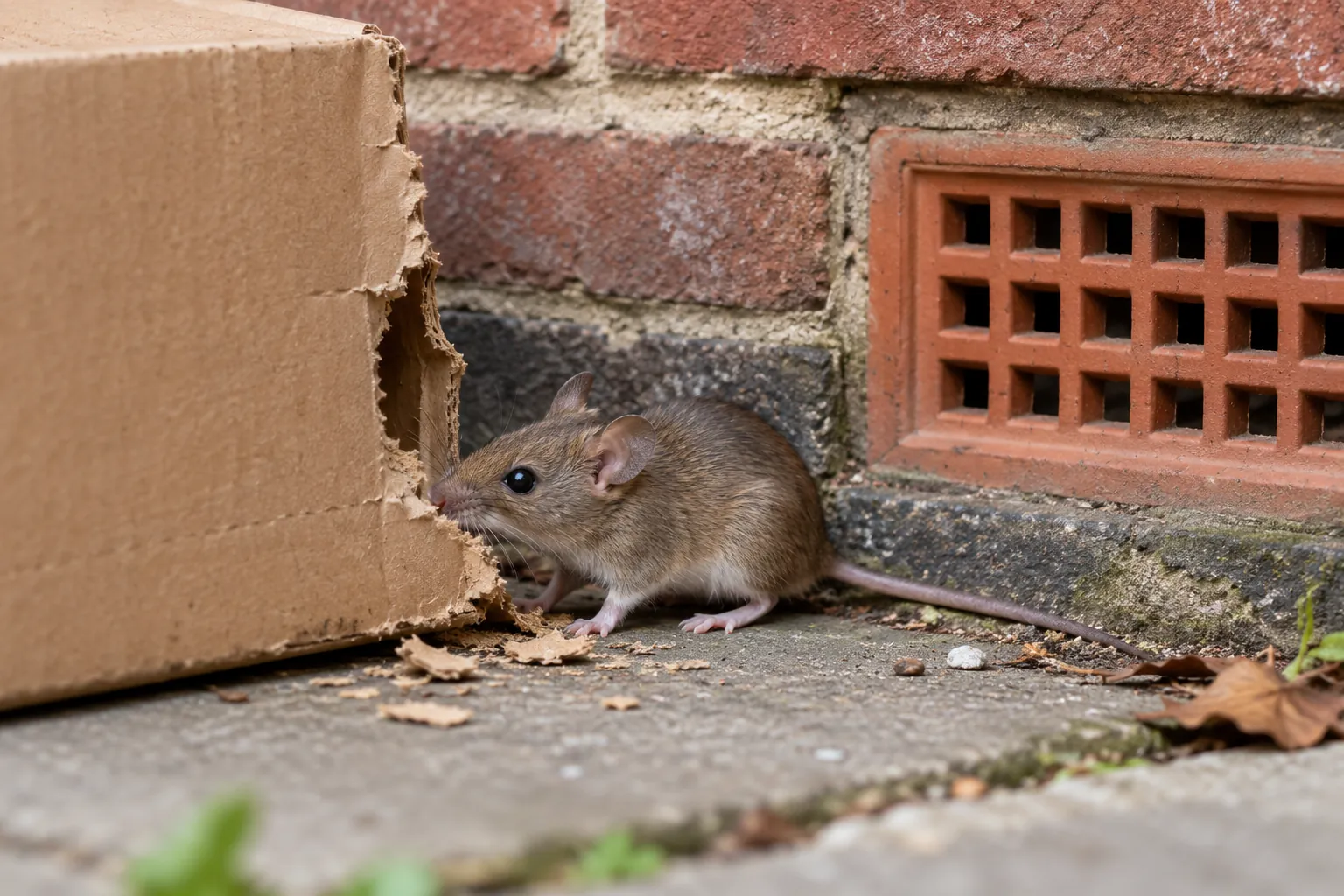
The enquiry starts with where you noticed the mouse, rather than an assumption that the whole building needs the same treatment. Explain whether sightings involve a kitchen, utility room, loft or several floors. Mention the dates, damaged packaging and sounds you have heard. A clear photograph can help, but droppings or a noise alone may not establish the species or current activity. The inspection needs to connect those observations to accessible routes.
Keep a record of new findings without handling contaminated material. Tell the specialist about previous traps, bait or building work, including work carried out by another contractor. That history helps distinguish continuing access from an apparent return after gaps have been repaired. Our inspection approach explains why findings come before a treatment recommendation.
Inspect the accessible route into the property
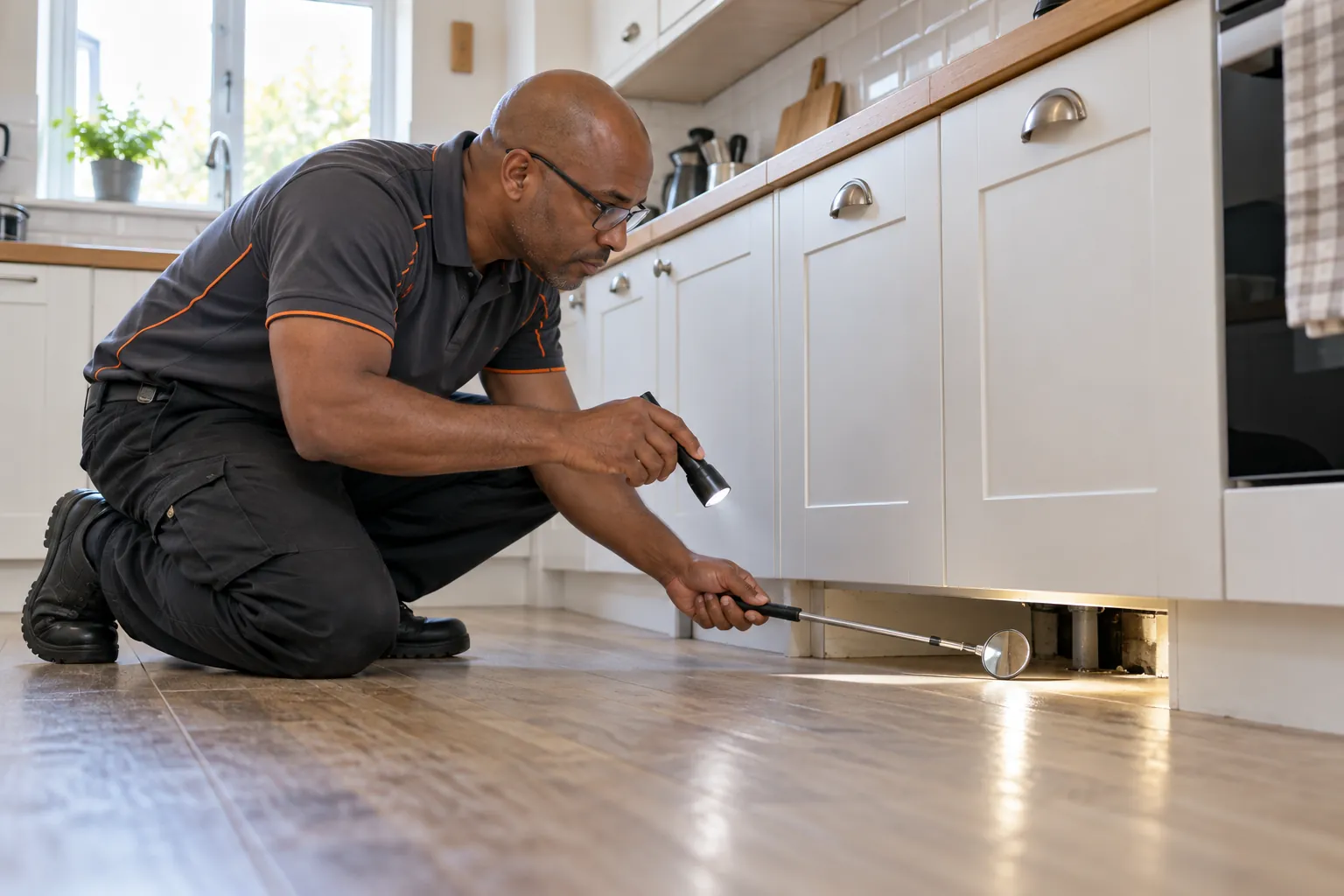
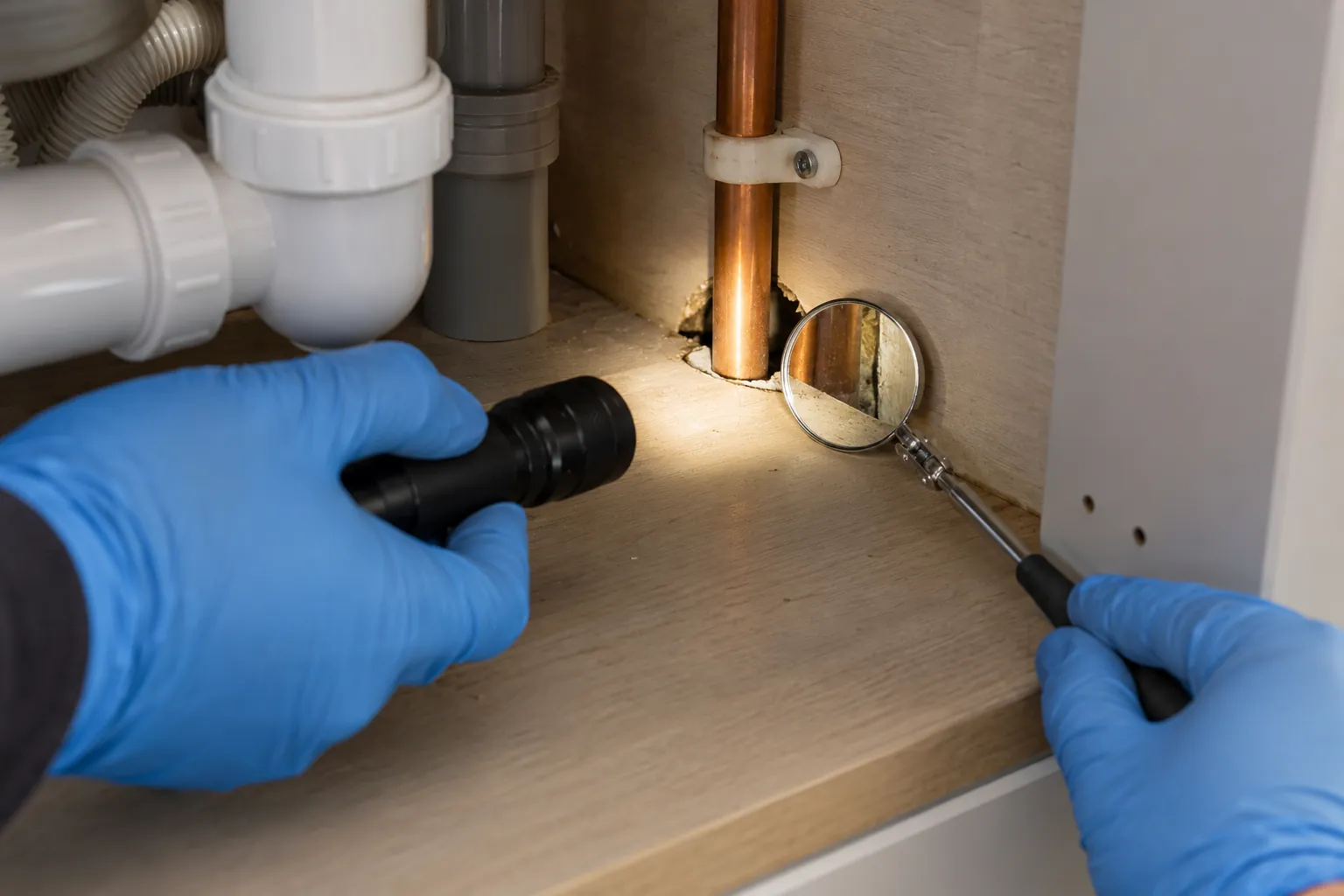
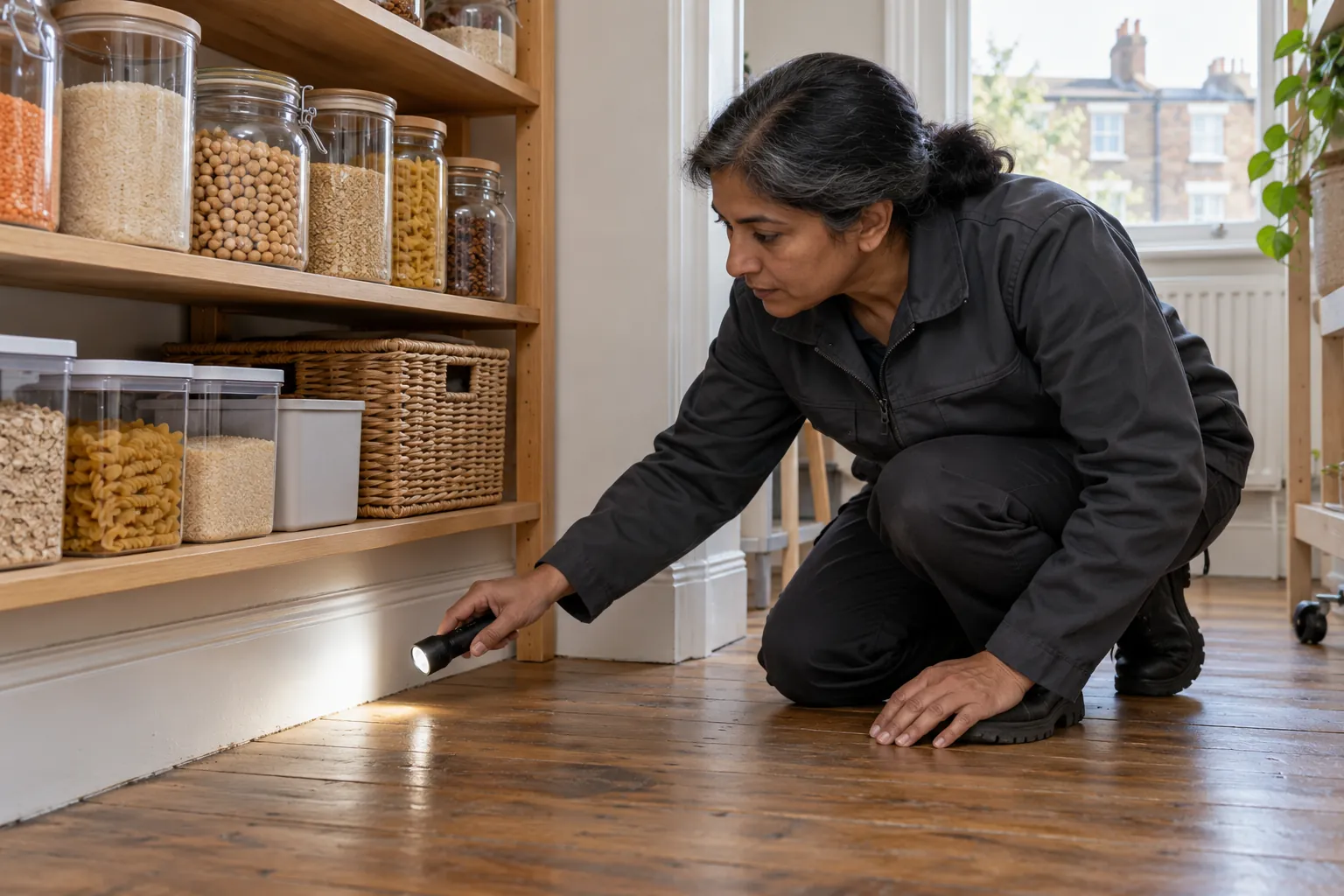
A torch and inspection mirror may be used to examine accessible edges behind kitchen units, service penetrations, boxed-in pipes and cupboard backs. The specialist looks for gnawing, rub marks, disturbed material and possible harbourage, then relates these to the reported sightings. Where a void cannot be reached without dismantling furniture or lifting a fitted panel, the limitation should be recorded. An inaccessible cavity must not be described as inspected.
The check also considers adjoining rooms and external openings where access is safe. An apparent gap inside a cupboard may lead into a larger service route rather than directly outdoors. Explain whether a neighbouring flat, communal cupboard or shared bin area could be involved. Permission may be needed before inspecting those spaces. Distinguishing the accessible route from an unverified source is important when deciding whether the visit can address the whole problem or whether another person must arrange access.
Separate activity, access and food sources
The extent of work is based on the distribution of evidence. A kitchen-only report may justify checking nearby food storage and pipe routes; repeated sightings upstairs may change the areas that need assessment. The specialist should explain which rooms show current evidence, which are being monitored and which could not be assessed. This avoids treating every room simply because it belongs to the same property.
Food availability, clutter against edges and gaps around services are considered alongside the animal itself. Secure food storage can reduce competing food, but tidiness alone does not establish that the building is proofed. Larger droppings, burrows or external runs may call for a different investigation; the rat control service covers that distinction. Tell us if you have seen more than one type of evidence so the enquiry is routed appropriately rather than assuming everything is mouse activity.
| Finding | What needs checking | Practical implication |
|---|---|---|
| Fresh-looking droppings in a cupboard | Other evidence, dates and nearby pipe routes | Map activity before deciding placement |
| Gnawed packaging in several rooms | Connected storage areas and service voids | Assess a wider inspection scope |
| Gap behind a fitted unit | Access, route continuity and permission to open panels | Record limits and plan proofing timing |
Discuss control before choosing a product
Possible options can include monitoring, appropriately placed mechanical traps, assessed rodenticide use and repairs to suitable entry gaps. These are options to discuss, not a promise that every visit includes every method. The choice depends on evidence, access, household risks and any previous work. Ask what the recommendation is intended to achieve and how its effect will be reviewed.
Where a product is proposed, its permitted use and instructions govern placement and precautions. Bait should not be scattered as an informal response to a sighting. Children, pets and other animals must be considered, as must the risk of equipment being moved by occupants or cleaners. Monitoring or trapping arrangements also require suitable positions and checks. The specialist should identify who will check devices, what access is required and what you should report between visits.
What happens during an agreed control visit
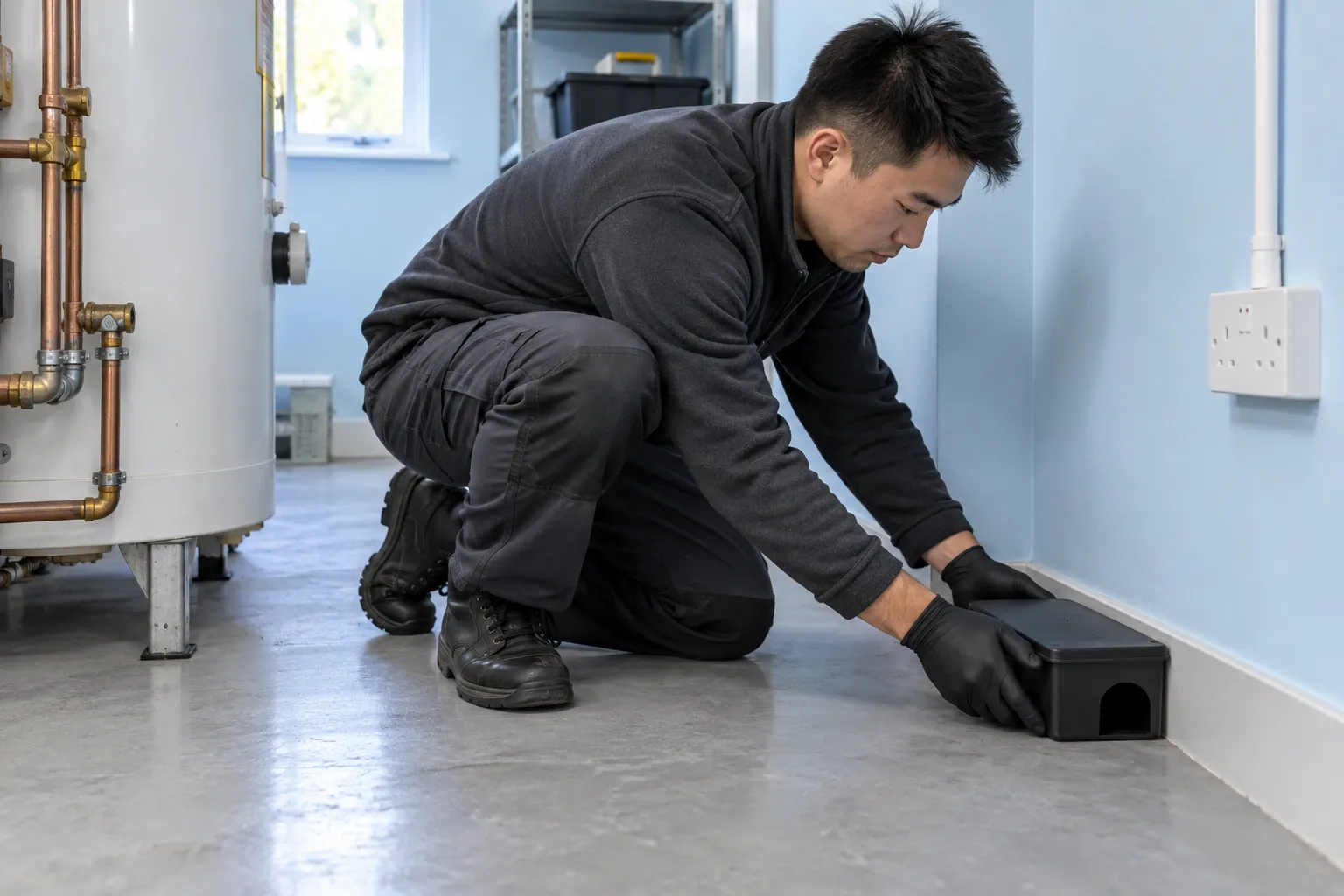
After the findings and scope have been explained, the agreed work is carried out in the accessible areas. This may involve placing suitable devices along identified routes, recording their positions and discussing repairs. Ask which devices contain a control product and which are for monitoring. Do not assume that an unmarked box can be opened or relocated; its purpose and restrictions should be explained to the people using the property.
The visit should leave a usable record of what was checked, what was done and what remains uncertain. In a workplace, this may need to be shared with the person responsible for cleaning, food storage or building maintenance. In a rented property, a tenant may need to report building defects to the landlord. The arrangement for repairs is separate from establishing animal activity, so clarify whether proofing is included, recommended or dependent on another contractor.
Prepare access without erasing the evidence
Clear a safe route to the affected cupboards and the spaces you have agreed can be inspected. Move loose household items when it is safe to do so, but ask before pulling out heavy appliances or removing fitted panels. Keep photographs of damaged packaging and the locations of sightings. Explain any mobility or access difficulty before the appointment, so the planned inspection does not depend on a task you cannot carry out.
Protect food in suitable closed containers and make arrangements for pets during the visit. Do not seal an opening solely because a mouse was seen nearby; the timing of proofing needs to fit the inspection and control plan. Likewise, avoid adding household products or moving existing traps immediately before the specialist arrives without explaining what has been used. Contact us if preparation instructions conflict with access or safety requirements in your home.
Use the monitoring record to judge progress
After the visit, follow the instructions for the devices and any products actually used. Keep children and pets away from restricted locations. Ask how suspected contamination should be addressed rather than sweeping or handling it without advice. Do not disturb monitoring positions during routine cleaning, and tell the specialist if a device is moved, damaged or made inaccessible by another occupant.
Record further sightings by date, room and location. A review can compare that information with device findings and the original route assessment. Continuing sightings may point to an untreated route, a source outside the accessible area or a need to adjust the control approach. They should prompt a review, not an unplanned increase in product. Any follow-up visit, its purpose and its cost should be agreed; no fixed number of visits or guaranteed clearance period is stated here.
| Part of the visit | Confirm before work | What to record afterwards |
|---|---|---|
| Control equipment | Purpose, safe placement and checking arrangements | Sightings and any device disturbance |
| Entry-point repairs | Whether included and when to seal | Outstanding gaps or shared access |
| Further visit | Reason, timing and separate charge if applicable | Changes since the initial inspection |
Plan repairs around the confirmed routes
Proofing is most useful when it addresses the route that has actually been established. The specialist can discuss accessible gaps, door edges, ventilation details and service penetrations, while recognising that larger structural repairs may need a suitable tradesperson. Sealing a visible hole does not verify the condition of every concealed void. Ask which recommendations are immediate, which should wait until activity is reviewed and which require permission from a landlord or managing agent.
Review food storage, waste handling and access to seldom-used cupboards alongside repairs. In connected properties, one household cannot always control a communal service route or bin store alone. A coordinated access plan may therefore matter more than repeating the same work inside one kitchen. The Southall pest control homepage provides the wider service range if the inspection identifies a different pest. Keep the report available when arranging maintenance so that repairs address the documented gaps.
What determines the scope and price
No Southall mouse-control tariff has been confirmed for publication. The areas affected, accessible routes, proposed equipment, proofing work and any review visits can change the quotation. Ask whether the price covers inspection alone or an agreed control visit, what happens if the source cannot be accessed and how additional work is authorised.
If mouse activity is disrupting food storage or a working kitchen, explain the urgency when calling +44 20 3966 2383. Provide the postcode, affected areas and any access restrictions so availability and the next suitable step can be discussed. The enquiry does not itself confirm an arrival time. Keep potentially affected food separate and wait for instructions about devices, repairs or cleaning rather than adding a second treatment while awaiting the visit.
Questions about this service
Mice Control — questions
Can a mouse enter through a kitchen service gap?
An accessible opening can be part of a route, but the route must be assessed rather than assumed from its size alone. Show the specialist the affected cupboard and explain whether the pipe boxing continues into another room or shared area.
Does one mouse sighting mean every room needs treatment?
No. The distribution of evidence determines which areas need inspection or monitoring. Mention sightings on other floors and keep the locations distinct; a report from one cupboard does not establish activity throughout the building.
Will you automatically put down poison?
A particular control product is not promised in advance. Ask which option is proposed after inspection, why it fits the evidence and what precautions apply. Monitoring, mechanical control and proofing considerations may affect the decision.
Can I move the mouse boxes to clean behind them?
Ask before moving any device. Its position may relate to an identified route, and changing it can make the monitoring record less useful. If cleaners or other occupants need access, arrange that around the agreed precautions.
Who deals with a route through a communal cupboard?
Tell us who can authorise entry to that space. A landlord or managing agent may need to coordinate access or repairs. An inspection inside your flat cannot confirm the condition of a locked communal service route.
Does filling one visible hole finish the job?
Not necessarily. The opening may be one part of a connected route, and proofing timing should fit the control plan. Ask which gaps were confirmed, which remain unassessed and what monitoring will show whether activity continues.
Discuss the findings.
Agree the next step.
Call with the affected rooms, your Southall postcode and the signs you have noticed.