
Pest control services · Southall
Bed Bug Treatment Southall
Bed bug treatment needs a clear picture of the sleeping area and the spread of evidence. An inspection considers mattresses, bed joints, nearby furniture and belongings before a method is proposed. Tell us about sightings, previous treatment and any movement of items between rooms when discussing a visit.
- Mattress piping and accessible bed joints examined.
- Headboards and nearby furniture considered as harbourage.
- Room-to-room spread assessed from evidence and item movement.
- Preparation matched to the proposed treatment method.
- Review findings distinguished from bites or old spotting.
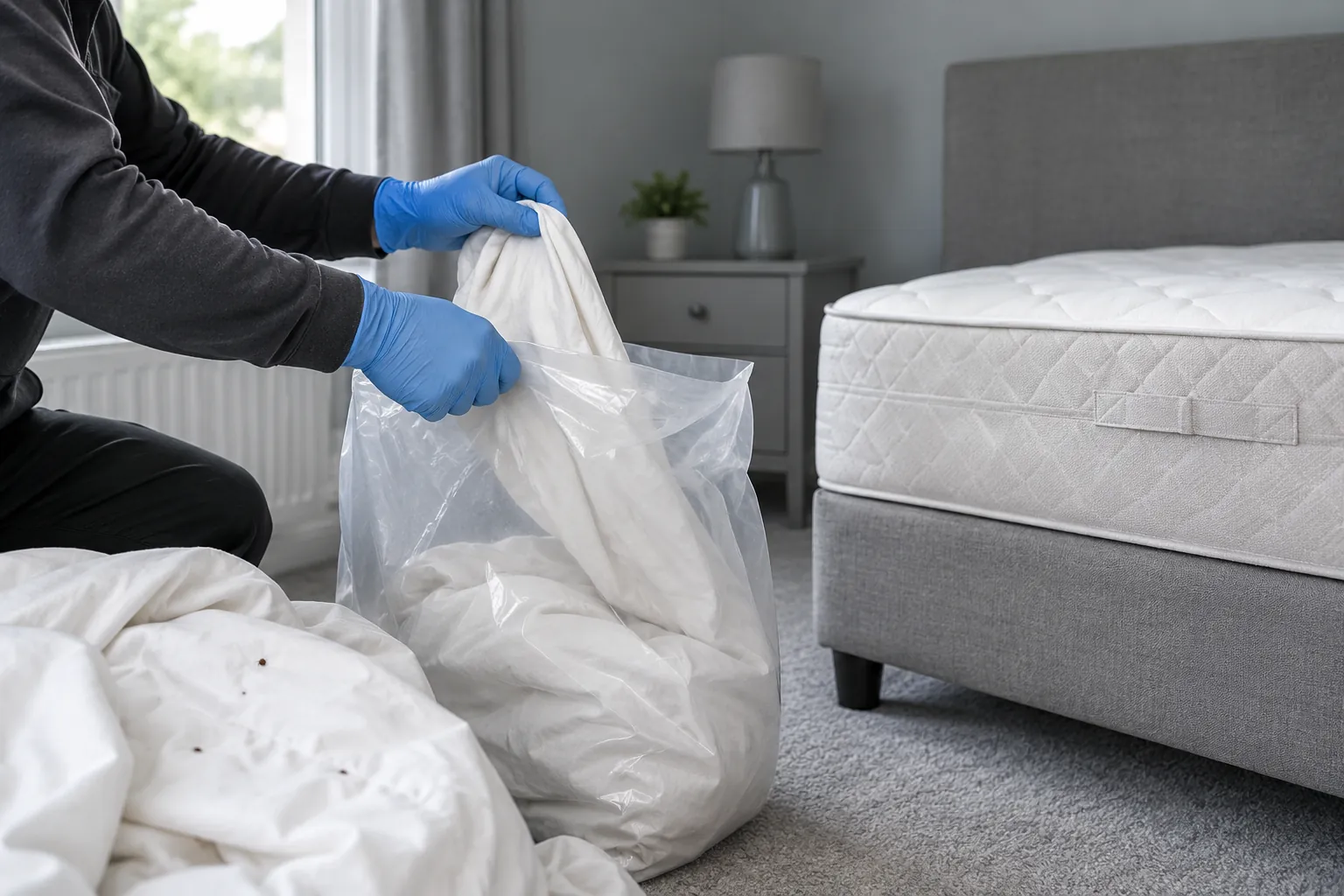
Contain belongings before moving them
Ask which bedding and clothing need attention and how they should be handled. Where bagging is advised, contain items before carrying them through unaffected areas. Laundering, drying or other handling instructions must suit the material and the proposed method. Do not discard a mattress or move it into a hallway simply because bed bugs are suspected; discuss how an affected item should be managed first.
Clear a safe approach to the bed and nearby furniture without redistributing loose possessions. Identify heat-sensitive or delicate belongings if they could affect the plan, even when heat has not yet been selected. Mention children, pets, aquariums and any personal circumstances relevant to room access. Ask about preparation before the visit if the requested work cannot be done safely or if fitted furniture prevents the access that was discussed.
Establish evidence in the sleeping area
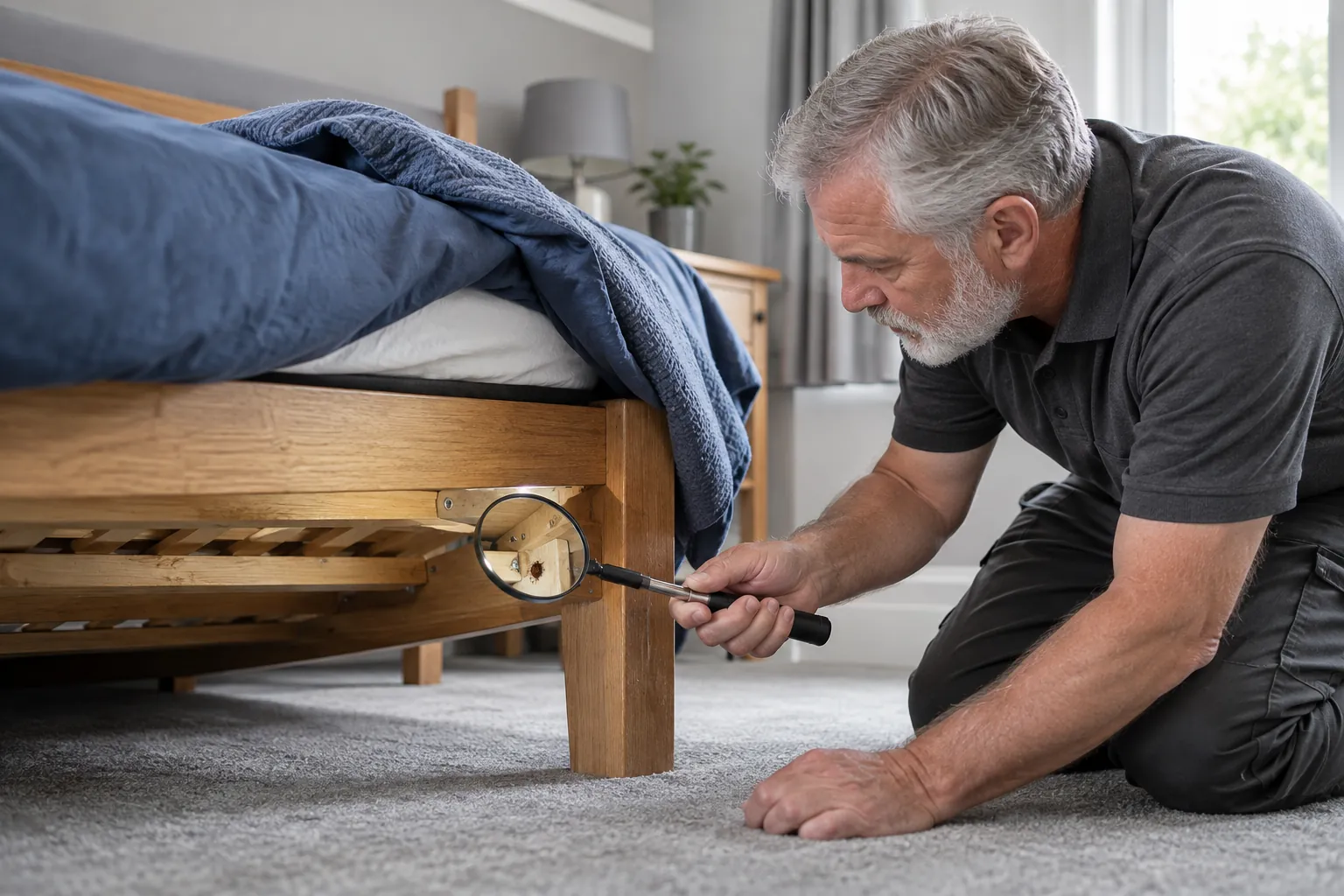
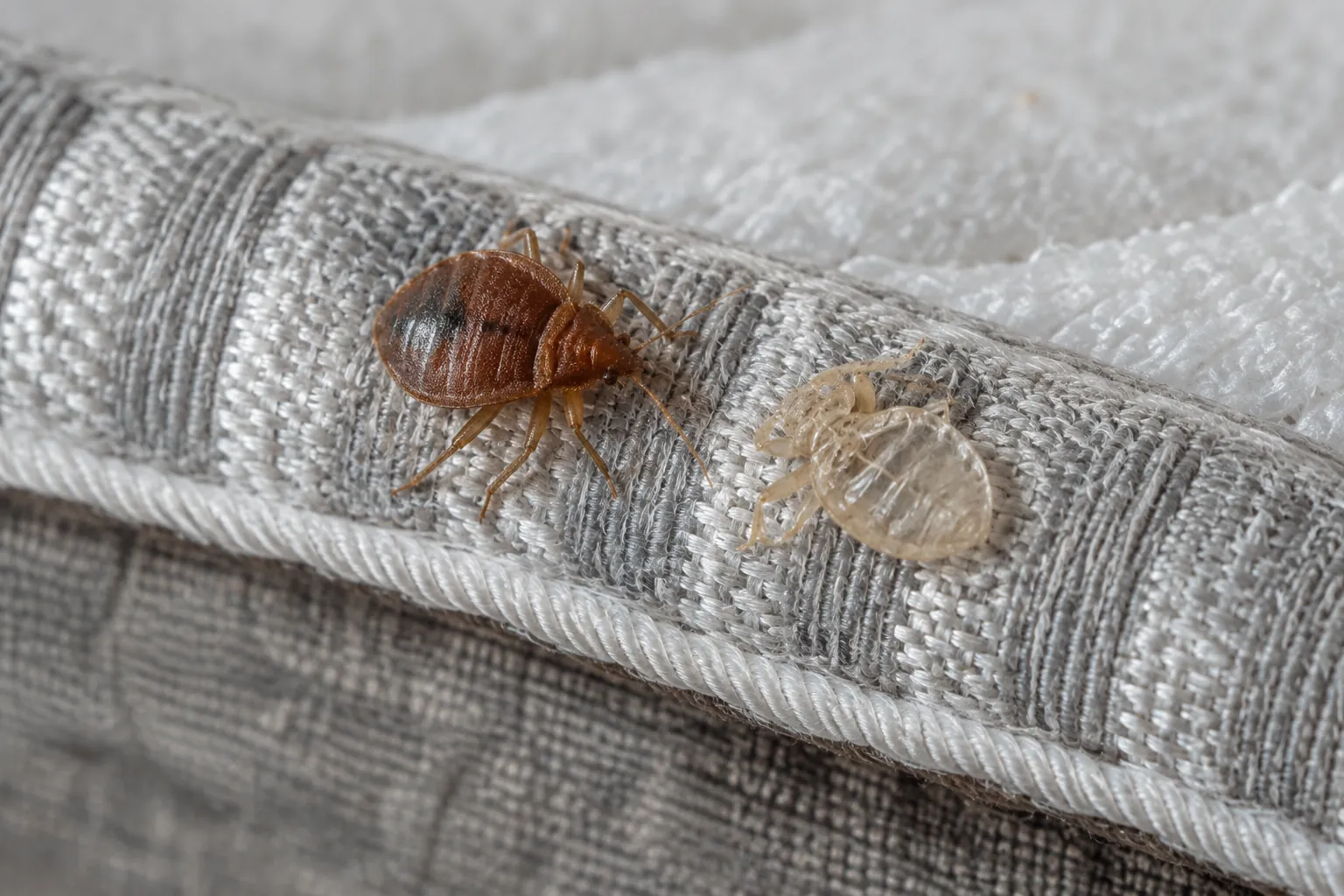
Explain whether you have seen an insect, found spotting near the bed or noticed cast skins in furniture joints. Keep clear photographs and note the exact location. Skin reactions alone do not reliably identify bed bugs, and an inspection should not be replaced by a diagnosis based on a photograph of bites. Evidence on a mattress may also need to be distinguished from old marks or another type of insect.
Tell the specialist when the concern began and whether furniture, luggage or bedding has moved since then. This is relevant to the inspection scope rather than a reason to assume a particular source. Previous products and visits should be described with dates where possible. The inspection information sets out the importance of explaining uncertainties, especially when evidence is limited or a bed frame cannot be accessed without preparation.
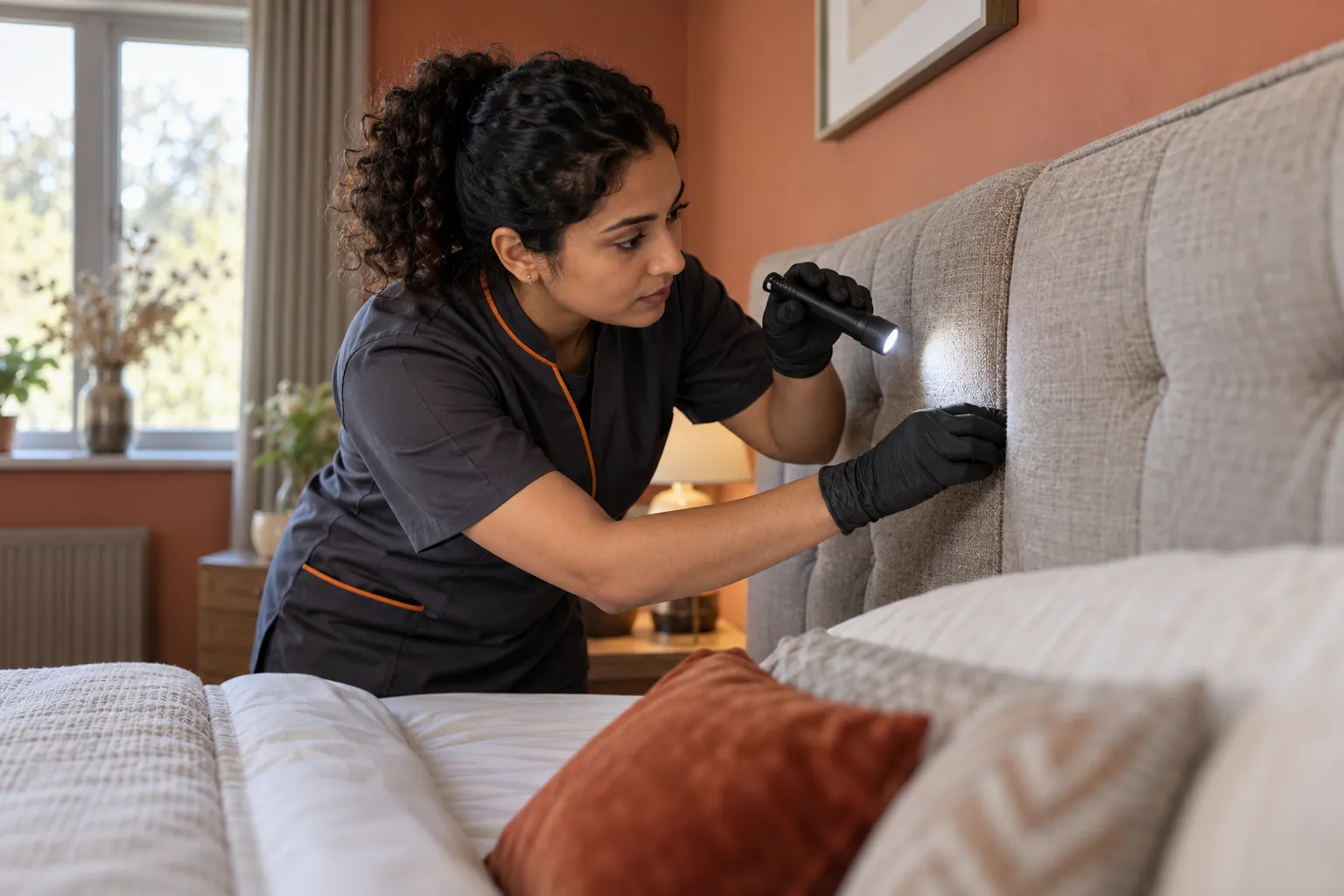
Inspect the bed as a set of connected hiding places
A torch and suitable inspection tools may be used around mattress piping, accessible bed-frame joints, fixings and the back of a headboard. Nearby bedside furniture, skirting details and furnishings can also require attention. The specialist should explain what can be examined safely and what needs the occupant to clear access or arrange dismantling. An inaccessible fitted headboard should not be treated as if every surface behind it has been checked.
The inspection considers the distribution of evidence rather than simply the visible surface of a mattress. A few findings close to one joint may lead to a different plan from evidence on several items or in neighbouring rooms. Ask which items are affected, which are being assessed because of their position and which could not be examined. That distinction helps make preparation proportionate and prevents unnecessary movement of belongings through the property.
| Evidence or limitation | What the inspection considers | Effect on planning |
|---|---|---|
| Insect or cast skin at a bed joint | Identification and nearby harbourages | Target the relevant furniture and room |
| Findings in more than one bedroom | Access and movement of belongings | Discuss connected-room assessment |
| Fitted headboard cannot be reached | Safe access or agreed dismantling | Record the limitation before quoting work |
Assess adjoining rooms and the movement of belongings
Explain who uses each bedroom and whether anyone has changed sleeping rooms since the concern arose. Moving loose bedding, luggage or furniture can affect where the inspection needs to extend. The specialist may recommend looking at connected areas when the history or evidence supports it, but a whole-property treatment should not be assumed from a single unconfirmed mark.
In a shared or rented property, access may depend on other occupants or a managing agent. Arrange permission before a visit is planned around adjoining rooms. Keep the account of events factual: the date an item arrived, where it was placed and when evidence was noticed. It is rarely useful to attribute blame to a visitor or neighbour without evidence. The treatment scope should describe the rooms and contents included, along with any uncertainty that may affect later review.
Choose a method after identification and assessment
Possible approaches may involve targeted professional treatment, suitable physical removal methods, monitoring or a specialist heat assessment. Ask which method is proposed for the evidence in your rooms and what its application involves. The pest, room contents, extent of activity, access and household circumstances determine what can be proposed. Ask how the recommended method addresses the identified harbourages and what preparation it requires.
If a heat option is being considered, the separate bed bug heat treatment page explains the assessment of contents, monitoring and practical arrangements. Heat should not be assumed to be part of an ordinary treatment quotation. Where a product is proposed, its approved use and instructions determine precautions and restrictions. Avoid combining household sprays or foggers with the plan without discussing them; additional products can affect evidence, placement and safe use of the room.
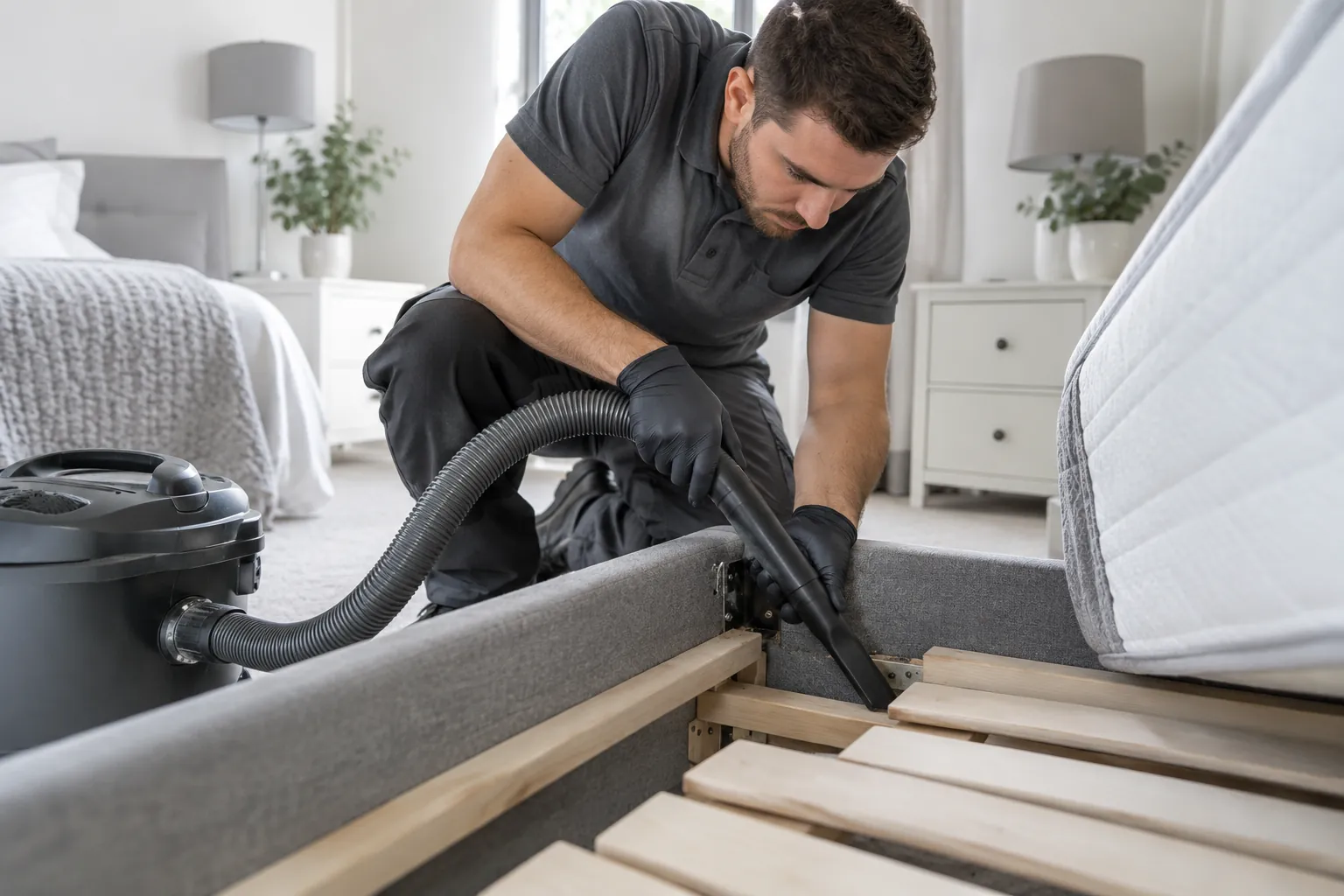
Work through the agreed rooms and furniture
Before treatment begins, confirm the affected items and areas included in the plan. Access to bed joints, furniture edges and relevant surfaces may depend on preparation completed by the occupant. Any dismantling, protection or movement of furniture needs a clear arrangement; it should not be assumed that a technician can safely move every heavy item alone. Tell the specialist about fragile fittings or furniture that cannot be taken apart.
During the visit, the proposed work should follow the findings and the method agreed. Equipment such as an inspection torch, crevice vacuum or monitoring device may be relevant, but the exact tools are confirmed for the job. Afterwards, ask for a record of treated or monitored areas, limitations and instructions. In accommodation used by different occupants, ensure the person responsible for cleaning and room access also receives the practical restrictions.
Follow the instructions for the treatment actually used
Re-entry, cleaning and ventilation arrangements depend on the method and products used. Confirm when the room may be occupied, which surfaces must remain undisturbed and when vacuuming or laundering can resume. Advice from an earlier visit or another household may not apply. Keep children and pets away from restricted areas, and make sure cleaners or other occupants do not remove monitoring items or disturb treated locations inadvertently.
Continue recording sightings by date, room and item. New activity, old spotting and a skin reaction do not carry the same evidential weight. A follow-up may be needed to assess ongoing findings, newly emerging insects or access that was unavailable during the first visit. Its purpose and timing should be explained. Do not treat continuing concern as a reason to add products independently; a review should establish what the evidence means before further work is agreed.
| Task | Confirm before treatment | Why it matters |
|---|---|---|
| Handling bedding | Bagging and material-appropriate laundering advice | Limit redistribution of suspect items |
| Using the bedroom | Re-entry and occupancy instructions for the method | Avoid assuming all treatments have identical restrictions |
| Cleaning edges or furniture | Which areas must remain undisturbed and for how long | Preserve the agreed treatment or monitoring arrangement |
Reduce unnecessary movement and review vulnerable items
The practical prevention plan should focus on how belongings are handled and how future evidence will be recognised. Discuss luggage storage, the inspection of incoming furniture and the management of affected items without introducing a routine that is unrealistic for the household. Reducing clutter around the bed can make inspection and monitoring easier, but it is not proof that an infestation has ended.
Retain the record of affected rooms and preparation completed so a later enquiry can distinguish new evidence from the original findings. If the insect is not a bed bug, another service may be more appropriate; flea treatment concerns a different pattern of resting areas and environmental activity. This is a reason to identify the insect carefully, not to choose between treatments on the basis of itching alone.
Understand what the quotation includes
The number of rooms, bed construction, furniture access, level of preparation and proposed method can influence the quotation. No Southall bed bug tariff has been confirmed here. Ask whether inspection, treatment, dismantling and review visits are included or separately agreed. Clarify how a change in the assessed extent would affect the proposal, particularly in a shared property where access to an adjoining room has not yet been arranged.
Call +44 20 3966 2383 if the concern is making a bedroom difficult to use. Give the postcode, rooms affected, any clear insect evidence and previous treatment history. Give the affected sleeping areas and access details so appointment availability and the next suitable step can be discussed. While waiting, avoid moving loose belongings to another bedroom or applying another product before the preparation and inspection arrangements have been discussed.
Questions about this service
Bed Bug Treatment — questions
Do I have to throw away the mattress?
Disposal is not an automatic requirement. Ask how the item can be inspected and managed before moving it. Carrying an uncontained mattress through shared areas can complicate the situation and may not address other harbourages.
Can an upholstered headboard be part of the inspection?
Yes, if it can be accessed safely. Explain how it is fixed and whether its back can be reached. Any dismantling or permission requirements should be settled before the visit is planned around that area.
Should I sleep in another room before the visit?
Discuss room use when arranging the enquiry rather than moving belongings or bedding without advice. The inspection needs an accurate account of the rooms used and any changes made since evidence was noticed.
Does this booking automatically include heat treatment?
No. A heat assessment and its equipment, preparation and monitoring arrangements need specific discussion. Ask which method is proposed and what the quotation covers before assuming heat is included.
Can old marks show that bed bugs are still active?
Marks can persist after earlier activity. Record their locations and any new insect evidence so the specialist can distinguish historical findings from current observations. Do not judge the result solely by the presence of an old stain.
Why might the specialist ask about bedside drawers?
Nearby furniture can provide sheltered joints and edges that affect the inspection scope. Explain whether drawers can be emptied or moved safely; the bed surface alone may not show all relevant evidence.
Discuss the findings.
Agree the next step.
Call with the affected rooms, your Southall postcode and the signs you have noticed.