
Pest control services · Southall
Carpet Beetle Treatment Southall
Carpet beetle treatment should follow the larvae and the materials they can use, rather than the room name alone. An inspection considers natural fibres, sheltered edges, accumulated lint and stored furnishings. Describe the damaged items and insect evidence so the source and practical treatment scope can be established.
- Larvae and cast skins assessed alongside textile damage.
- Carpet edges and accessible under-furniture areas checked.
- Stored wool, feathers and other vulnerable materials considered.
- Source removal and treatment separated from fabric-care decisions.
- New damage distinguished from historical holes at review.
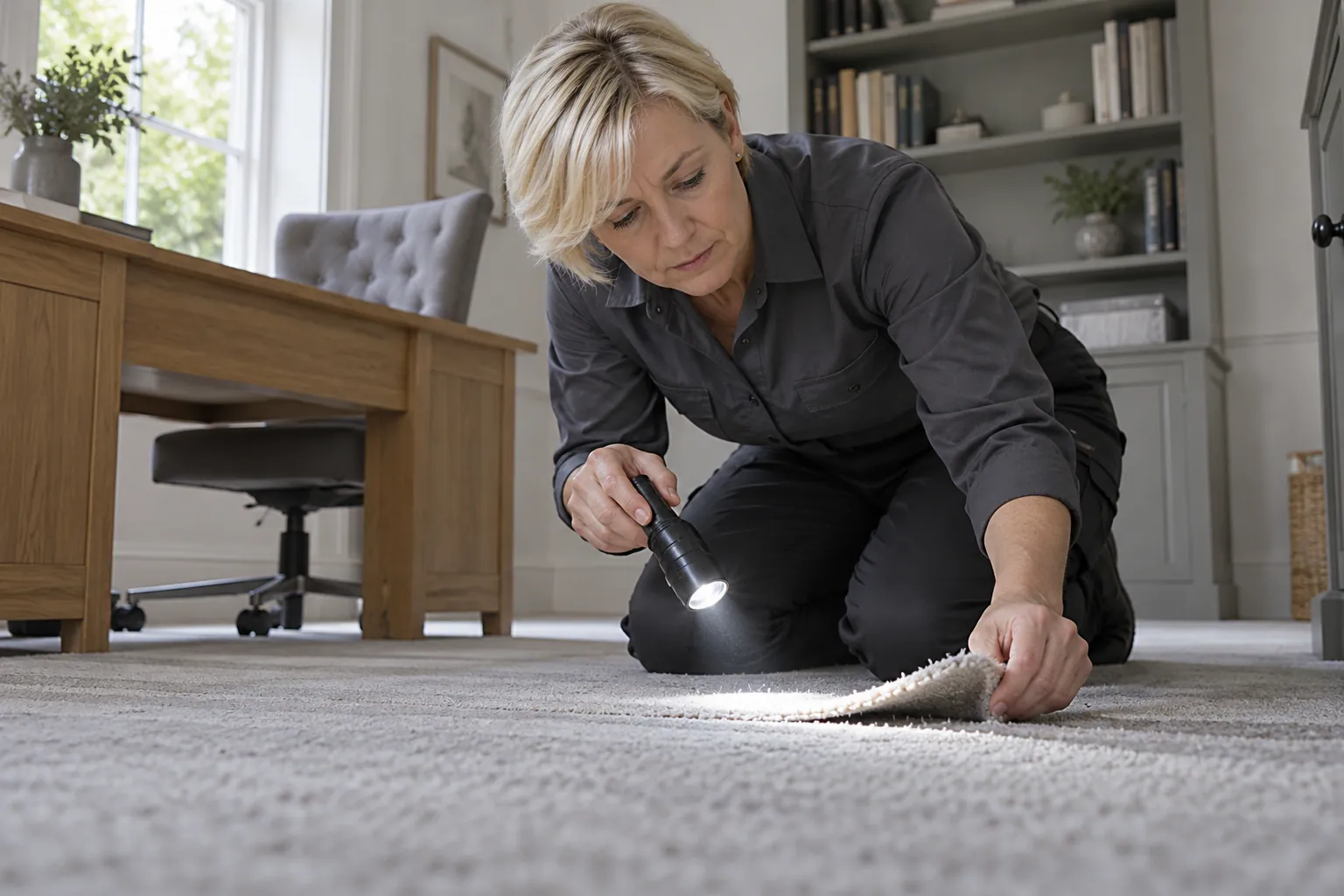
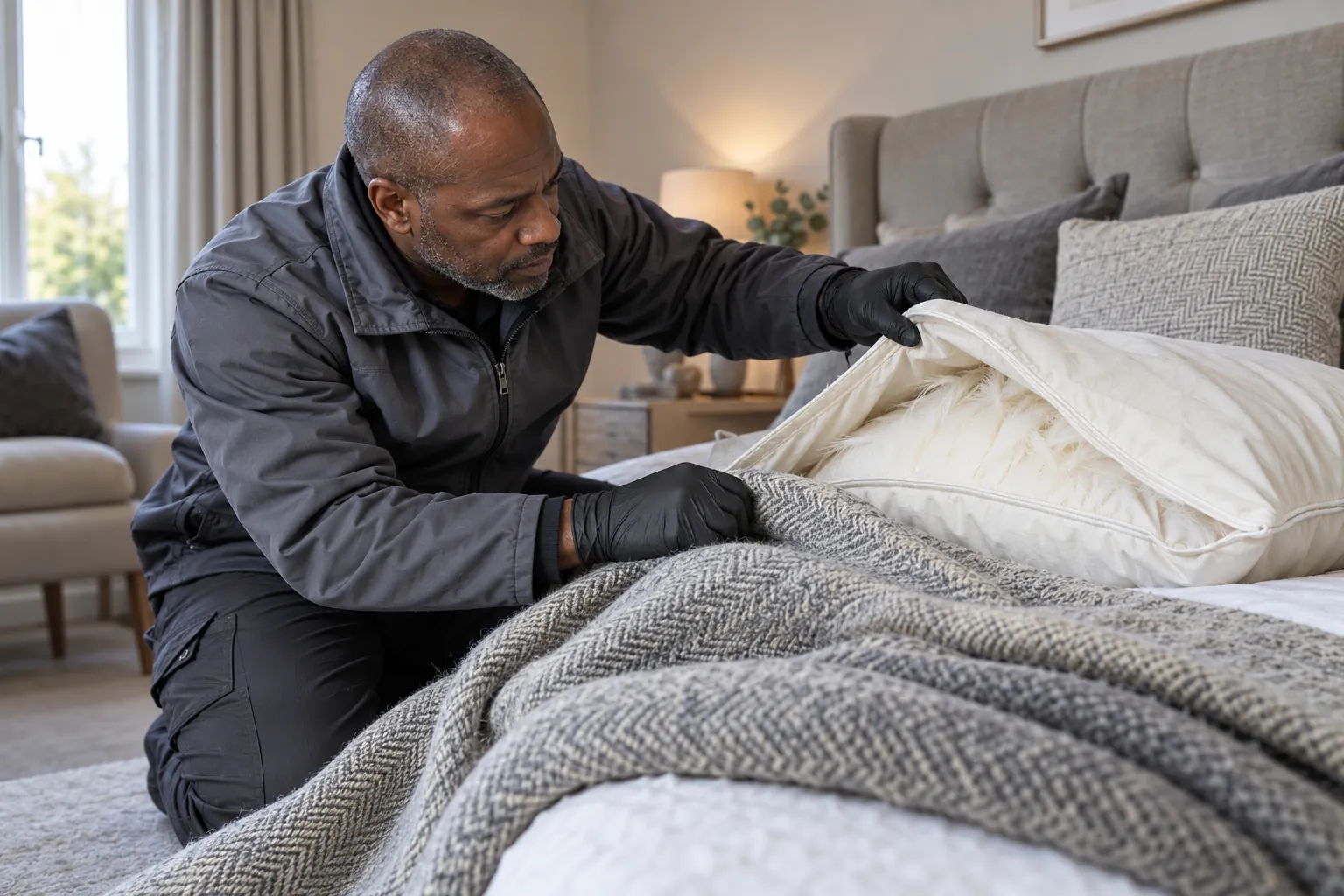
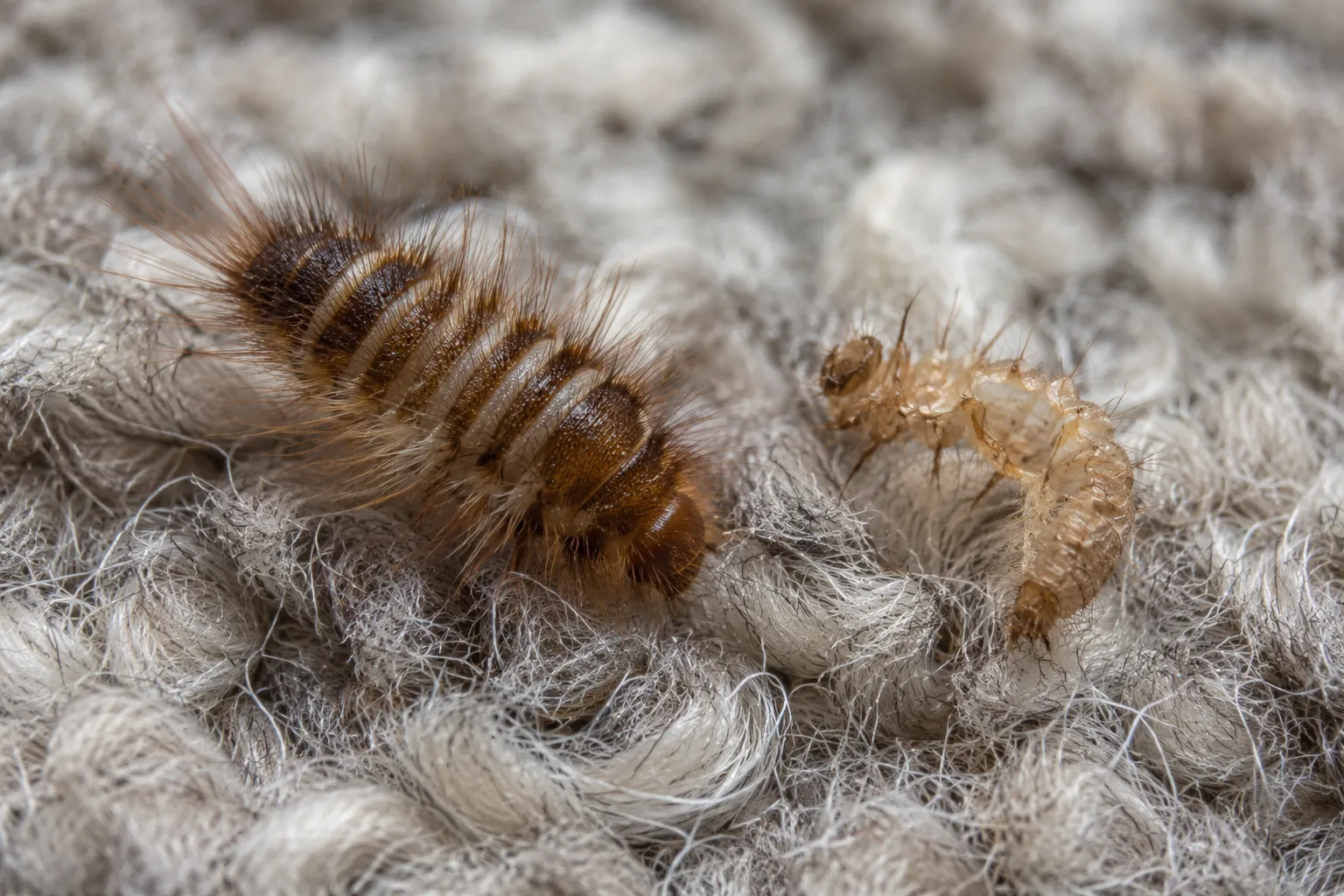
Examine fibres and the concealed areas around them
The inspection may consider accessible carpet edges, the space beneath furniture, storage cupboards and susceptible textiles such as wool or feather-filled items. A torch and close examination can help locate larvae, cast skins and debris in relation to the reported damage. The condition of a visible adult is only one part of that assessment; the material supporting larval activity is the more useful question.
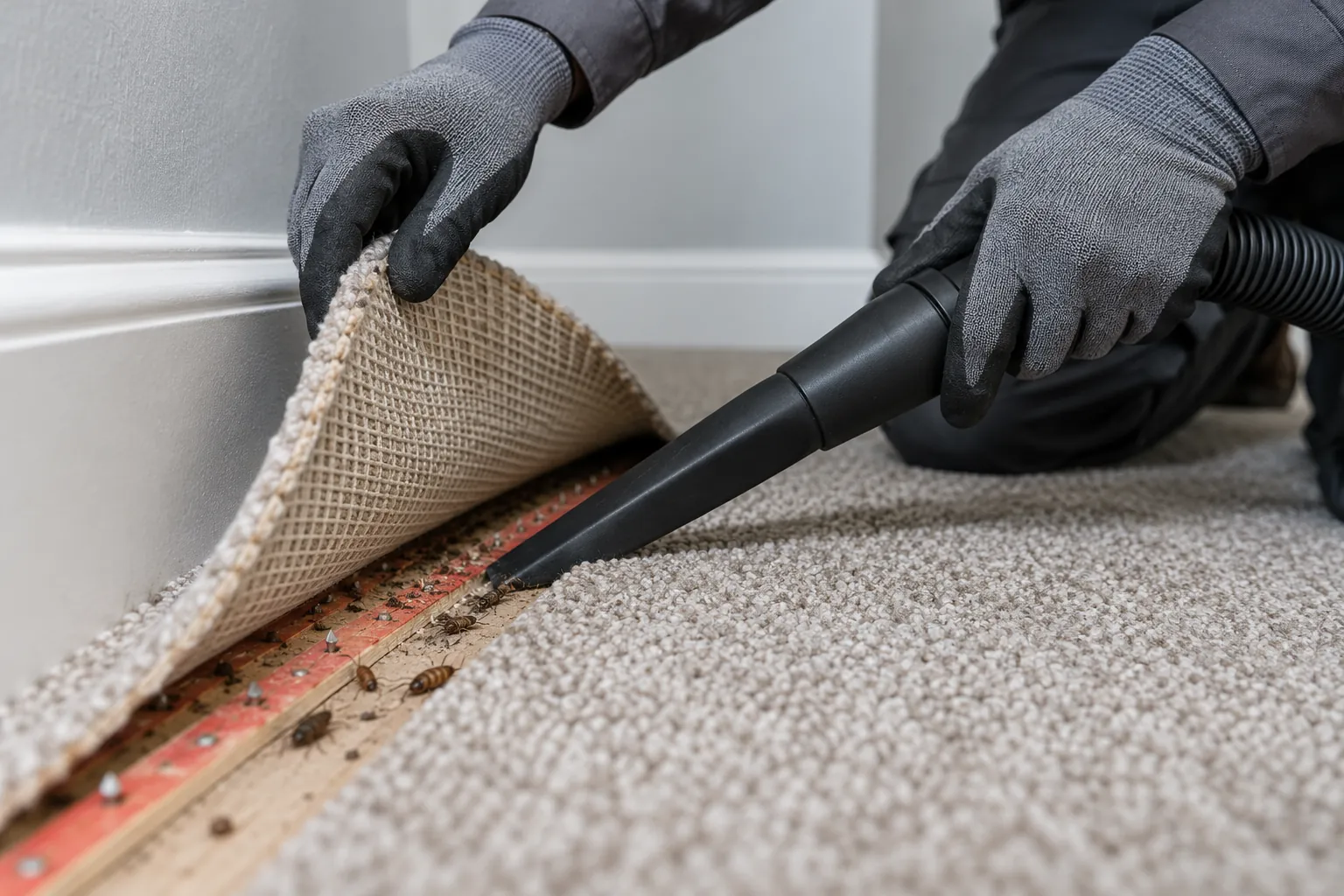
Explain fitted furniture, heavy items and carpet edges that cannot be reached safely. Lifting a floor covering or exposing grippers is not assumed to be a customer preparation task or an included part of every visit. Any access needs a safe, agreed arrangement. Ask which surfaces and contents were actually checked, which adjacent materials should be examined and which concealed areas remain outside the assessment because access was not available.
Read the larval evidence, not just an adult beetle
Explain whether the concern involves a small adult beetle, a hairy larva, cast skins or damaged material. These observations have different meanings. Adult beetles near a window do not by themselves establish a larval source throughout a carpeted room. Clear photographs of the insect and the original location of damage help the specialist decide what needs inspecting before a treatment is proposed.
Natural-fibre damage can have more than one cause. Holes, debris or an insect seen on a surface should not automatically be labelled carpet beetles without checking the evidence. The moth control service concerns a different textile-pest assessment. Keep damaged items in their original storage context where practical, or record that context before they are moved, so the inspection can connect the material with a plausible source rather than a general room-wide assumption.
Trace the material source across storage and furniture
A larval source may involve lint, stored vulnerable fabrics or other organic material in an undisturbed location. The inspection should relate that possibility to evidence, rather than assume a whole building needs treatment because one beetle was seen. Describe where suspect items have been stored and any recent movement of rugs, upholstered pieces or boxes. This history can change the areas requiring assessment.
Where a possible source lies in a roof space, fitted void or other restricted area, the scope should identify the access limitation. Do not disturb wildlife-related material or assume a pest visit includes clearing a loft. Further access or appropriate specialist advice may be needed before any work there is considered. In a rented home, a landlord or managing agent may need to authorise access or repairs that cannot be arranged by the occupant alone.
| Finding | Inspection focus | Useful distinction |
|---|---|---|
| Adult beetle near a window | Identification and nearby evidence | Does not locate every larval feeding area |
| Larvae or cast skins at an edge | Vulnerable fibres, lint and sheltered access | Connect the finding to material and location |
| Damaged stored textile | Original storage and adjacent contents | Distinguish affected items from unassessed nearby stock |
Prepare access while preserving the original material history
Keep photographs of larvae, cast skins or damage and note where each item was found. Ask which textiles should remain for inspection and which should be contained or cleaned before work. Laundering or drying must suit the item and its care instructions. Do not dispose of a valuable rug or apply a high-temperature process simply because another material was handled that way.
Clear safe routes to agreed floor edges and storage spaces without lifting fitted coverings or moving heavy furniture alone. Explain any object that cannot be moved or treated as proposed. Discuss preparation and material limits before the visit if delicate contents, a shared storage room or restricted access changes the plan. Useful preparation gives the specialist access and context; it should not erase all evidence or transfer suspect material into unaffected storage.
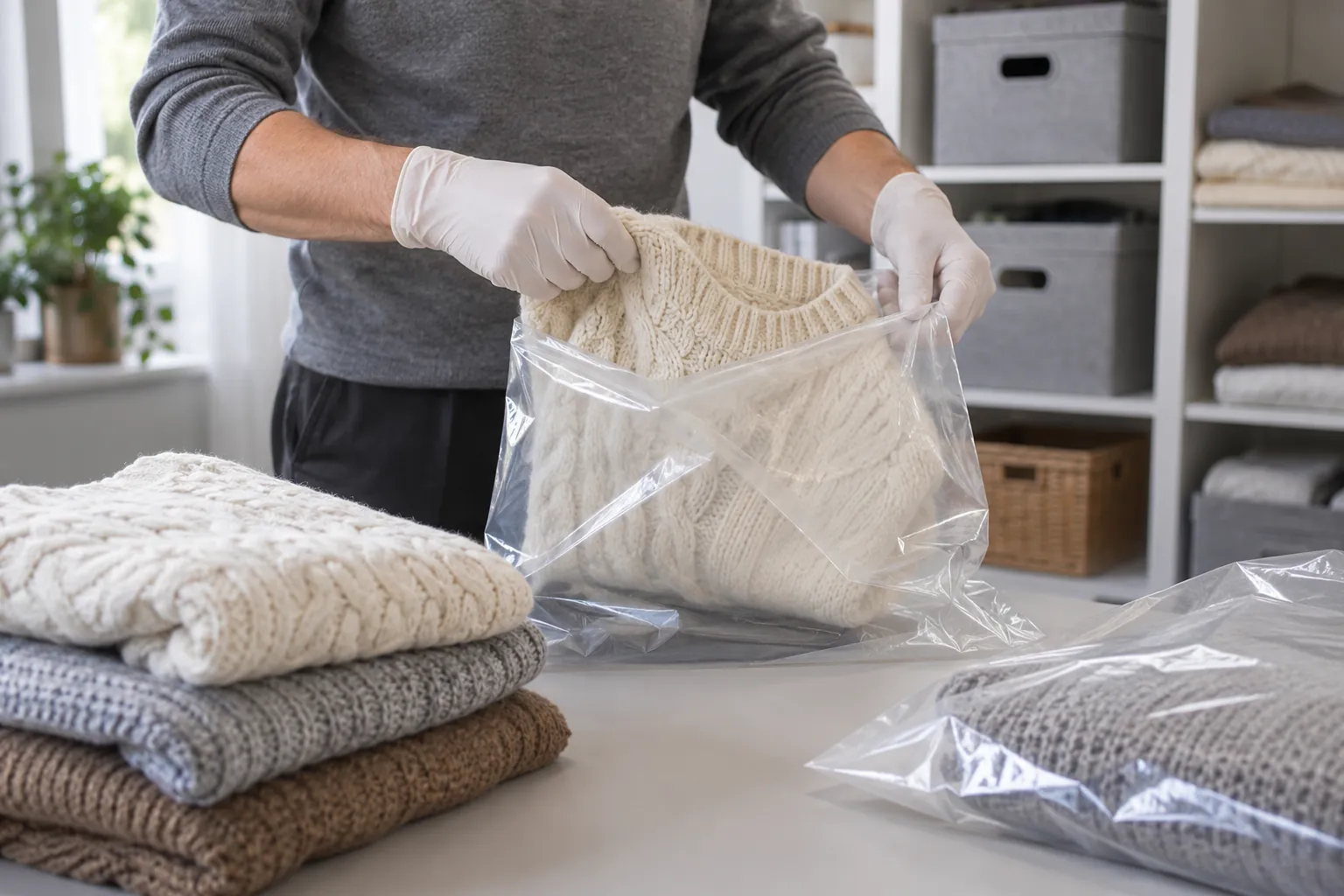
Agree how floors, furnishings and contents will be accessed
Before work begins, confirm the carpet edges, furniture areas and storage included in the proposal. Loose contents may need to be contained or moved according to the preparation instructions. Heavy furniture, fixed joinery and fragile floor coverings require a safe arrangement, not an assumption that one person can move or lift everything during an ordinary appointment. Record any area that remains inaccessible.
Equipment such as an inspection torch, crevice vacuum or monitoring device may be relevant, while any product application follows the assessed method and permitted instructions. Ask for a clear handover record of areas checked, work completed and further material handling needed. In a household where several people use stored textiles, make sure the arrangement is understood so suspect items are not casually returned to a cleared cupboard or moved into another room.
Separate source management from product selection
Possible measures can include appropriate cleaning or removal of an accessible source, suitable textile handling, monitoring and targeted treatment of relevant sheltered areas. No specific insecticide or method is confirmed in advance. The decision depends on identification, affected materials, extent of larval evidence and access. Ask which parts of the proposed work address the source and which are intended to assess whether activity continues.
Material compatibility matters. A treatment suitable for an accessible floor edge is not automatically appropriate for a delicate garment, valuable rug or upholstered finish. Cleaning and conservation decisions may require a separate material professional. The specialist should explain limits rather than make a blanket promise about treating every affected object. Avoid adding household products to the fabrics without discussing their care requirements and the precautions for the agreed plan.
Judge progress from new findings and the material record
Follow the instructions for the actual product or monitoring arrangement used. Confirm which floor edges or furniture locations must remain undisturbed and when cleaning can resume. Share those instructions with other occupants or cleaners. Report if a device is moved or a treated area is cleaned earlier than agreed, because this can affect the interpretation of any later findings.
An existing hole or old cast skin can remain after the source has been addressed. Record fresh larval evidence, newly damaged material and the places where it is found, rather than judging the result from a mark that was already present. A further inspection may be needed to review a concealed source, assess later preparation or consider continuing activity. The reason, access requirements and cost of any additional work should be agreed rather than assuming every case follows a fixed return-visit schedule.
| Decision | Confirm before work | Review information |
|---|---|---|
| Cleaning a vulnerable item | Material compatibility and who performs the work | Record which item was cleaned and returned |
| Accessing a carpet edge | Safe lifting and whether included | Note any area that remains inaccessible |
| Assessing further damage | Original photographs and dates | Separate old holes from new feeding evidence |
Clarify which material and access tasks are included
The extent of affected fabrics, floor-covering access, furniture construction, possible source locations and proposed control or monitoring arrangements can influence the quote. Request a quotation based on the affected materials, source locations and work proposed. Ask whether inspection and treatment are included, whether specialist textile cleaning is separate and how additional access or a review visit would be agreed. A quotation should reflect the actual constraints of the materials rather than only the size of the room.
Call +44 20 3966 2383 with the postcode, the type of damaged material and any clear insect evidence. Explain what has already been moved, cleaned or treated, and mention valuable or fragile contents. Availability and the suitable next step are confirmed during the enquiry. Keep suspect fabrics contained while handling instructions are discussed, and confirm when an inspection can be arranged.
Keep susceptible storage assessable after the visit
Recommendations may involve suitable storage of cleaned vulnerable fabrics, attention to accessible lint and debris, and periodic checks of seldom-used items. These measures should relate to the material source identified in the inspection. Cleaning the visible carpet surface does not establish the condition under every fitted unit, and placing a suspect textile in a container does not itself make that textile unaffected.
Retain the inspection and material-handling record when moving furnishings or arranging later cleaning. It provides a reference for separating historical damage from new activity. The Southall aftercare guidance explains the wider principle of using specific instructions rather than generic treatment intervals. For evidence outside this textile problem, the confirmed pest services provide a route to the relevant assessment without assuming that every insect in a furnished room needs the same control.
Questions about this service
Carpet Beetle Treatment — questions
Do adult beetles at a window prove the carpet is the source?
No. They are evidence to identify and investigate, but the larvae and the material they use need separate assessment. Give the exact location and any photographs of larvae, cast skins or damaged fibres.
Is the larva more relevant than the adult to fabric damage?
Larval evidence is important when tracing the susceptible material and feeding area. The inspection connects that evidence with the original storage or floor location instead of assuming an adult sighting defines the whole scope.
Should I lift the fitted carpet before the appointment?
Do not assume this is required or safe. Explain the covering and access so any lifting, gripper exposure or furniture movement can be agreed. The visit may instead record a limitation or need a separate access arrangement.
Can every damaged wool item be cleaned in the same way?
No. Care requirements, dyes, finishes and construction differ. Ask for material-appropriate handling and use a suitable specialist where needed rather than applying a process intended for another fabric.
Why keep photographs of old holes?
They provide a baseline for review. An existing hole does not disappear after treatment, so dated photographs help distinguish historical damage from a genuinely new finding that may need further investigation.
Does clearing one cupboard rule out a hidden source elsewhere?
Not by itself. The assessment should explain what was inspected and which relevant areas were inaccessible. New evidence can justify reviewing another location rather than repeatedly treating the cleared cupboard without a source assessment.
Discuss the findings.
Agree the next step.
Call with the affected rooms, your Southall postcode and the signs you have noticed.